On Friday 14th of August 12 adults and 10 children gathered at 19:00 at the victory hall for a bat-based evening. We ranged from novices through to experienced veterans (as a small number had been on the previous Sustainable Duddon bat walk), all present to hear our local bat man Matt Taylor explain some basic bat ecology before leading us on a dusk amble of the Park with the assistance of Joe Kime from South Cumbria Bat Group.
Matt showed the attendees how to recognise the variety of bats we would be hearing that evening based on their ultrasonic call profiles – called sonograms. These we could see on our phones thanks to some handy echometers which visualise sounds and replay them at audible frequency. He also gave a brief overview of the behaviours of the eight bat species found in the Duddon catchment, and introduced the group to the wide range of bat sizes. Small bats like pipistrelles are only two fingers long, medium sized bats like brown long-eared and myotis are three fingers long, and Britain’s largest bat the noctule will just fit across your hand.
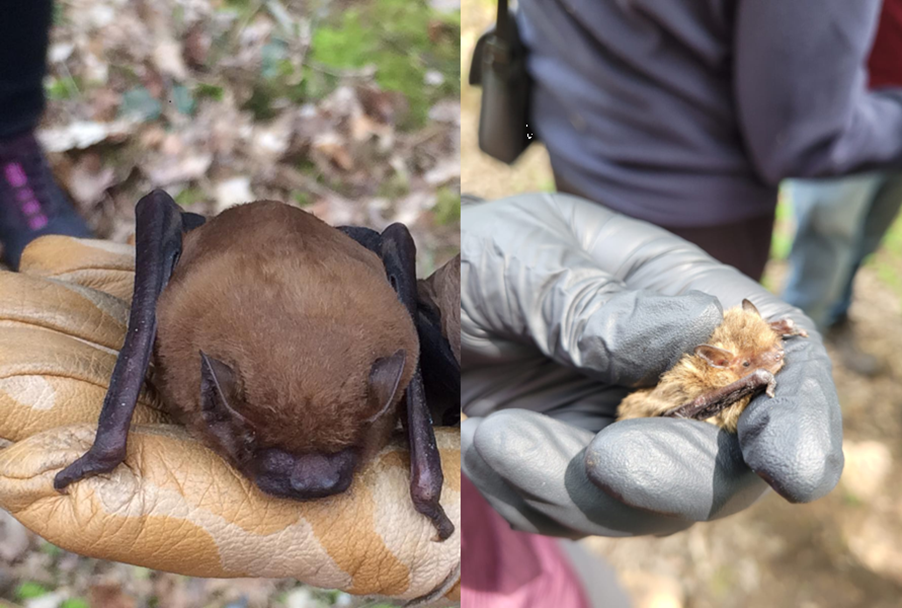
Figure 1: Left, a large noctule (Photo taken under license. Copyright Marie Athorn) and right, a small pipistrelle bat (Photo taken under license. Copyright Will Reece).
In addition to the bats there was a display of 20 moth species Rachel Isherwood had collected the previous night. Rachel and Matt explained the strong link between moths and bats, and the amazing evolutionary arms race that appears to have caused brown long-eared bats to quieten their echolocation when hunting.
It was a lovely, clear evening, and just before 9 pm the sky burst into life, initially with common and soprano pipistrelles skirting the trees, before a large noctule was heard and then spotted far above us. Shortly after sighting this swift-sized bat appeared, the previously travelling bats started flying far closer to us whilst feeding on all manner of tiny insects. The evening continued like this for the next 20 minutes, with more and different bats above and around us, some almost dive bombing the group whilst hunting.
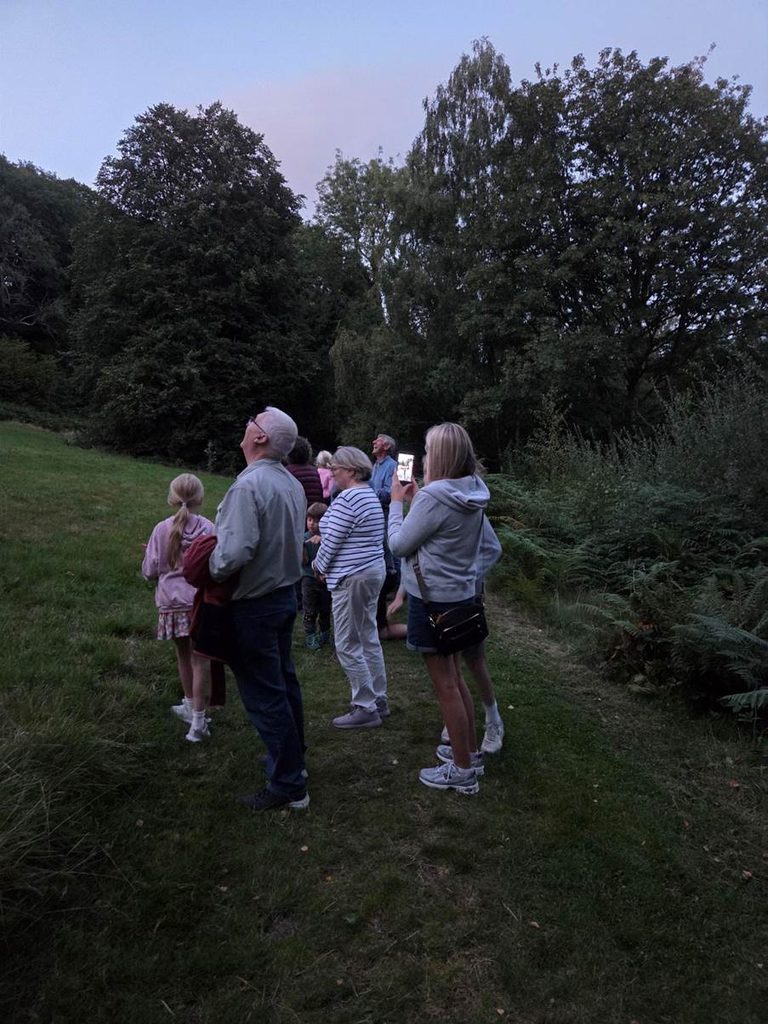
Figure 3: Attendees looking up to watch a noctule wheel away above the tree line.
The final act of the night before the light truly deserted us was Matt’s party trick. Standing by the edge of a large pond, we waited to catch a glimpse of a Daubenton’s bat. This bat skims across the water’s surface, using its large feet to fish for aquatic insects. Occasionally Matt would catch one in the beam of his torch, following its flight across the pond, allowing us to see this late emerging bat in action.
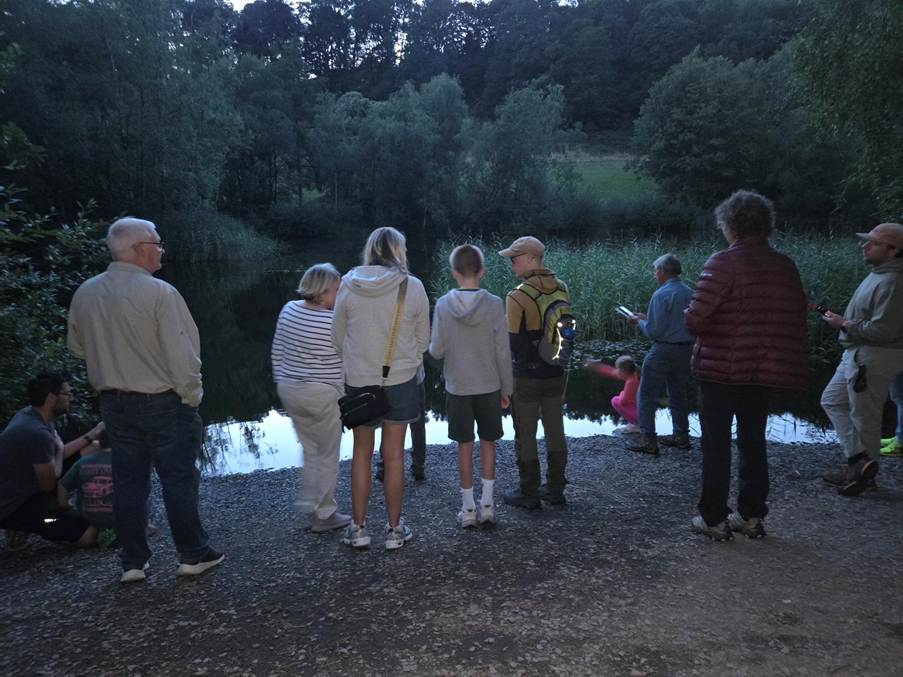
Figure 4: Attendees waiting to see a Daubenton’s bat skim the surface of a pond.
It was a lovely evening, with the weather and good company ensuring we walked back to the village in high spirits. A total of four different bat species were recorded by our collective devices during the walk: Daubenton’s, noctule, common and soprano pipistrelles. Some recordings could not be fully identified, but we potentially saw other species of Myotis bats.
Attendees to both Sustainable Duddon bat walks have thoroughly enjoyed the events, and the sense of community and interest in local nature was a strong throughline.
Sustainable Duddon will be running more bat walks in future, so make sure to keep track on their website https://sustainableduddon.co.uk/ , social media accounts, and in the Parish Pump.