The management of grey squirrels (Sciurus carolinensis) is nothing new to the Duddon. There have been a few stalwart guardians of the red squirrels working for years trying to protect and maintain a population around the area. Unfortunately, the reds had been pushed into isolated pockets around the area. Until recently these represented the southern edge of the reds in Cumbria.
Over past couple of years we have seen an increasingly coordinated and ever-growing community of supporters taking on this work. The work is led by South Lakes Red Squirrel Group and supported by our other partners. We have over fifty traps and feeders across the area. Traps are managed following LANTRA guidelines and we provide training for operators. Where possible we deploy smart traps. These ensure an alert is sent as soon as a trap is activated, ensuring traps are as humane as possible. The Duddon isn’t renowned for its phone signal and so this isn’t always an available option.
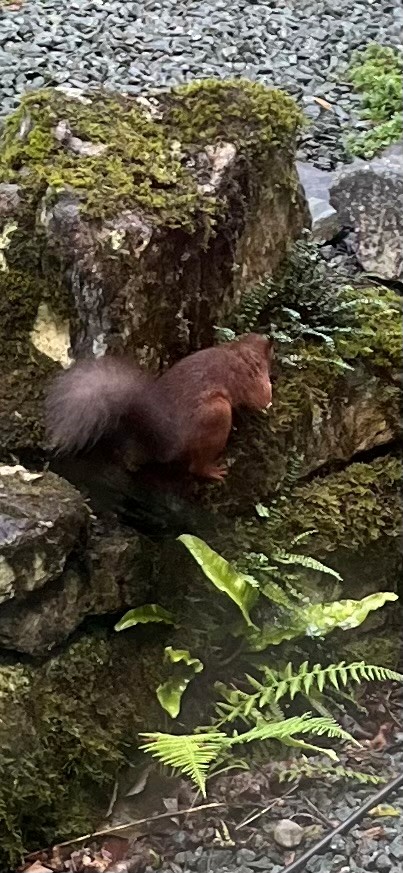
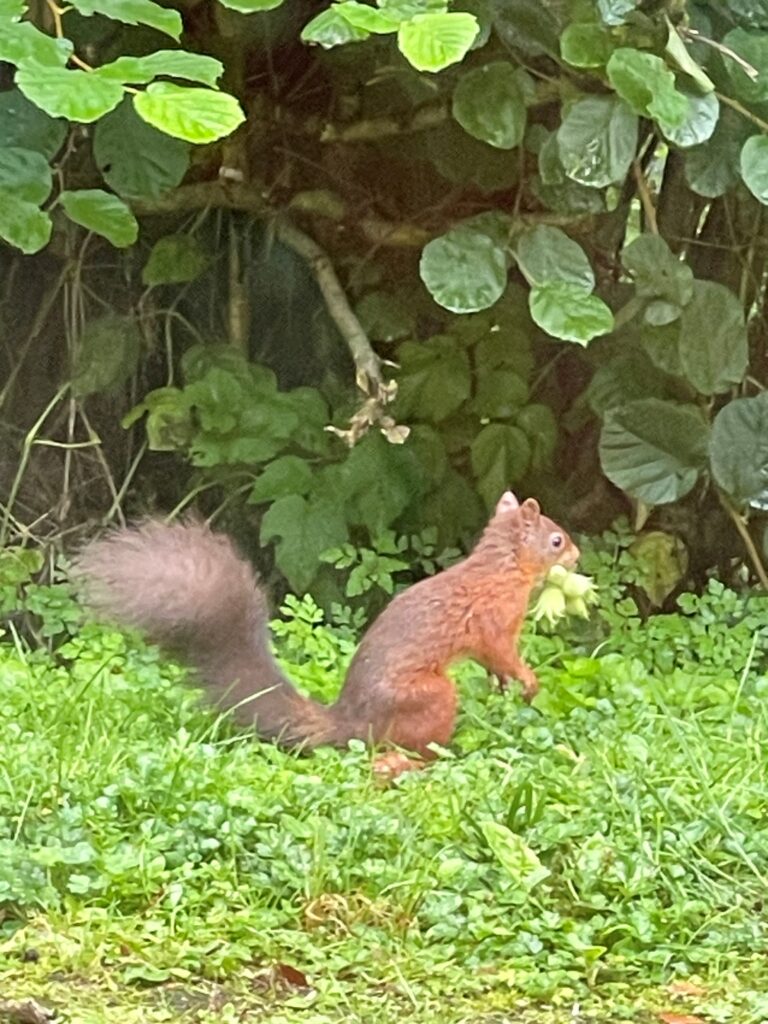
2025 has seen a noticeable increase in the sighting of red squirrels. This is testament to the effectiveness of the work our volunteers have been carrying out. Initially, our assumption was that the sightings were related to the isolated pockets of Red around Duddon Valley. However, red squirrels have been sighted in several places where there haven’t been reports for a decade or more. The return of the reds is rewarding for all those who have worked tirelessly over the years and is a bright point in what can sometimes feel a bleak out look for nature.
The management of the invasive grey squirrels in the United Kingdom offers significant ecological, economic, and conservation benefits. Introduced from North America in the late nineteenth century, grey squirrels have spread widely. They have become one of the most damaging invasive mammals in the UK. Their impacts extend far beyond competition with the native red squirrel (Sciurus vulgaris). Their impact affects woodland health, biodiversity, and the long-term viability of sensitive species. Effective management is therefore essential to restore ecological balance and protect vulnerable habitats.
The protection of native red squirrels, which have suffered severe declines due to competition and disease transmission is a huge motivating factor when managing greys. The grey squirrels outcompete reds for food, particularly during autumn when they can digest unripe acorns that red squirrels cannot. They also carry the squirrelpox virus, which is usually harmless to greys but fatal to red squirrels. Areas where grey squirrels are controlled show higher red squirrel survival, improved breeding success, and long-term population stability (Gurnell et al., 2015).
However, the advantages of management are not restricted to protecting reds alone. They extend to a wider range of species. Grey squirrels are known predators of bird eggs and chicks, especially those nesting in cavities or accessible nests. Studies have linked grey squirrel presence with reduced breeding success in songbirds such as chaffinches, blackbirds, and wood warblers, as well as woodland specialists including nuthatches and woodpeckers. By reducing grey squirrel densities, woodland managers can help improve survival rates of these species and support the recovery of declining bird populations.
Protecting trees is another critical benefit of managing grey squirrels. Grey squirrels cause extensive damage to broadleaved trees through bark stripping, particularly in young or developing woodlands. Bark damage can lead to crown dieback, fungal infections, reduced timber value, and in severe cases complete tree loss. The economic cost to UK forestry is substantial. The native woodland restoration schemes locally may be at particular risk. Managing grey squirrels can significantly reduce damage, improving the chances of successful replanting schemes.
Community involvement also delivers benefits, as has been demonstrated in the Duddon. Our project relies on volunteers, local landowners and community monitoring to track squirrel populations and support management actions. The initiative has improved public understanding of invasive species issues, fostered a sense of stewardship, and contributed valuable data to national conservation strategies.
In summary, managing invasive grey squirrels brings clear benefits for wildlife, woodland health, and conservation efforts. It protects red squirrels, safeguards bird populations from predation, reduces costly tree damage, enhances woodland biodiversity, and encourages community engagement. These combined advantages highlight the essential role of grey squirrel management in ensuring the long-term sustainability of the Duddon and its natural landscapes.