Improving the natural habitat of the River Duddon and its tributaries for the benefit of all wildlife
Welcome to the first issue of our Duddon River Association newsletter! Our intent is to keep our members and the wider community up-to-date with the great work that is going on in our catchment to monitor and improve our rivers. We also hope to use our newsletter to provide some information on the conservation methods that we use and also to share opportunities to volunteer for those who wish to get involved with ‘hands on’ work to improve our local rivers.
We are delighted to be holding our first guided walk and social event in August (full details on page 8) and I very much hope to see many of you there.
To get in touch with us with comments or questions please drop an email to duddonriverassociation@gmail.com. You can also follow us on Instagram or join our Facebook group.
Rick Browne
(DRA Chair)
What is the Duddon River Association?
Established in July 2006, the Duddon River Association (DRA) is part of South Cumbria Rivers Trust (SCRT), a registered charity which is dedicated to conserving and protecting the freshwater habitats in the local area.
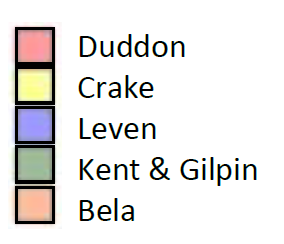
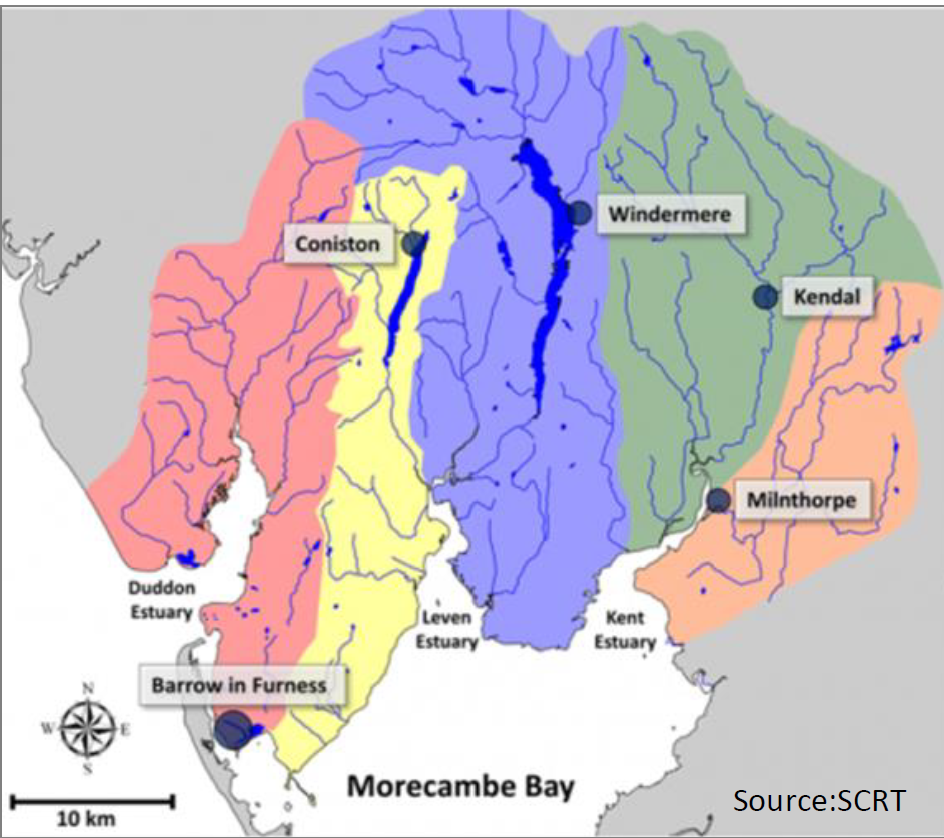
Under the umbrella of SCRT there are five main catchments, all of which drain off the Lake District fells into Morecambe Bay: the Duddon, Crake, Leven, Kent & Gilpin and Bela. This includes four of the Lake District World Heritage Site’s ‘13 valleys’. The Duddon is the western-most of the SCRT catchments (see the pink area on the map below) and covers approximately 300km2. It includes three lesser-known rivers which also discharge into the Duddon Estuary: the Lickle, Kirkby Pool and Black Beck. The catchment includes all the tributaries of these rivers.
The DRA aims to bring together agencies and volunteers to work together to monitor the habitats and improve the health of the river system in our catchment. Improving the riverine environment for wildlife will also have a long lasting beneficial impact on our local communities and also visitors throughout our beautiful region.
What issues face our catchment?
The main issues currently facing our catchment include:
Water quality (low pH spikes)
Forestry operations
Pollution from agriculture and domestic sources
Water extraction
Invasive Species
The River Duddon has natural background acidification from geological minerals. Also contributing to low pH spikes (ie. acidic conditions) are conifer plantations and clear felling practices. Additionally, the River Duddon suffered horrendous damage due to the effects of acid rain in the 1970s and 80s. This decimated river life and will continue to have a major impact for many years to come, particularly above Cockley Beck.
Acid conditions as low as pH 3.7 have been recorded on the Duddon; values this low are lethal to salmonid fish such as sea trout and salmon.
Widespread pollution (known as diffuse pollution) is an issue across the catchment. This is causing a decline in dissolved oxygen concentrations which are important for all stages of river life.
Pollution comes from a variety of sources including fertilisers and pesticides from agriculture. Also, with only a small area of the catchment connected to mains sewage, the large number of septic tanks can see maintenance issues causing diffuse pollution into local becks.
The Duddon Valley is the principal aquifer in the Barrow-in-Furness area, including the River Duddon itself, Harlock Reservoir and Poaka Beck Reservoir, which are all used as public water supplies. Mitigation measures are required to provide compensation flow to protect and improve water quality.
The River Duddon
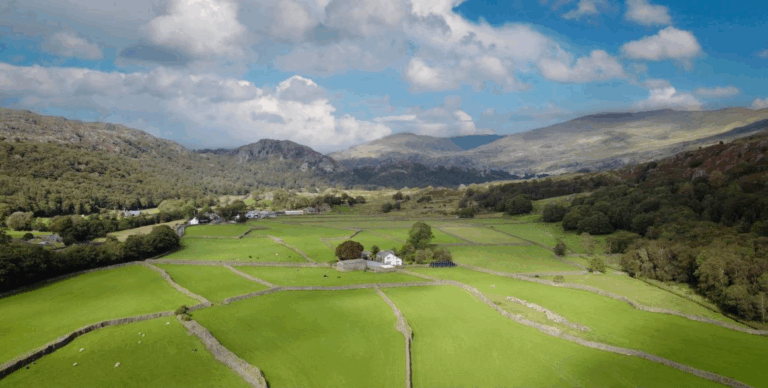
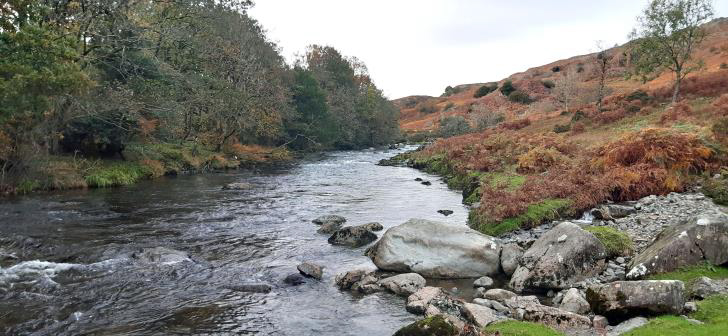
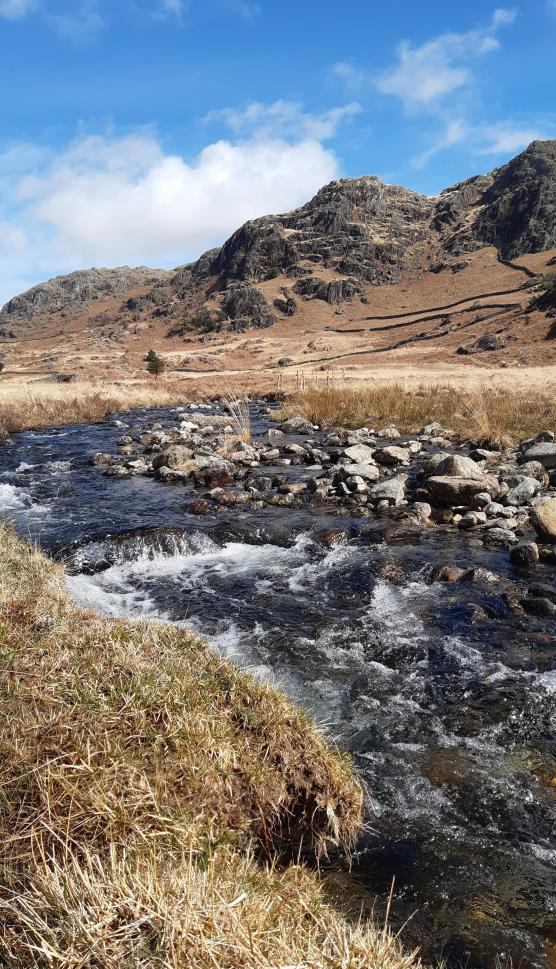
The River Duddon, the principal river in our catchment, begins at an altitude of almost 400m on Wrynrose Pass where it runs due west. At Cockley Beck it turns south and flows through a long-established farming community before continuing its 13 mile journey to Duddon Bridge.
The Duddon is a spate river which means that it experiences sudden and rapid fluctuations in water flow due to heavy rainfall and snowmelt. In spate, the Duddon becomes deeper, wider and faster flowing with strong currents. These powerful surges can last anything from a few hours to a few days.
Though undoubtedly an incredibly beautiful valley, as the Duddon has no major lake it doesn’t attract the same number of tourists as other Lakeland valleys. This is a hugely important factor for wildlife.
Though currently kept relatively under control, invasive species, especially Himalayan balsam also require continued vigilance, though the regular volunteer working parties have been successful in reducing the impact of this.
Looking to the future, floods, droughts and the impact of climate change will be a major challenge for our rivers. Additionally potential hydro schemes could have adverse impacts on the catchment, and the ominous threat of the Duddon Estuary Tidal Power Project, currently at the feasibility study stage, is a cause for concern and is being anxiously monitored.
How do we know how healthy our rivers are?
Monitoring of ten designated sites that have been agreed with the Environment Agency takes place on a continual basis. Also, all 22 major becks running into the Duddon have also been sampled, as well as the Lickle, Kirkby Pool and Black Beck. This programme runs continually.
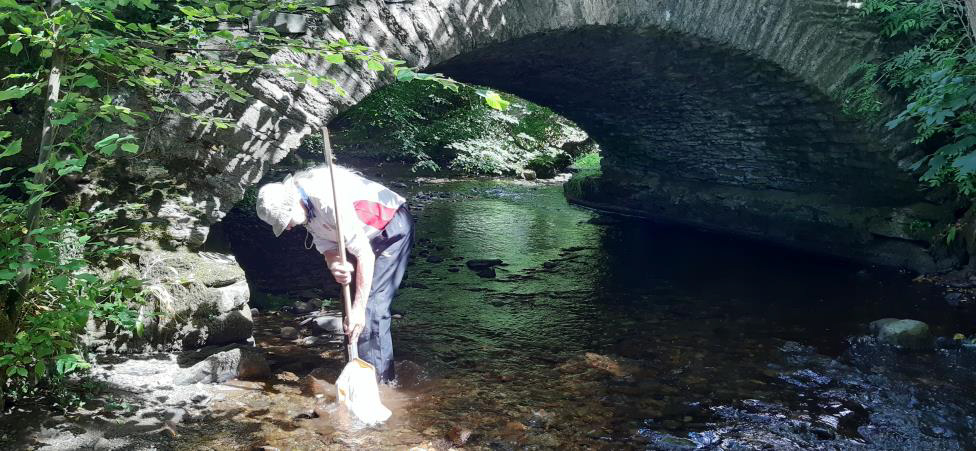
Samples are also taken of the invertebrate life by the DRA through kick sampling with the Riverfly Partnership at designated sites several times a year.
An electro-fishing programme to establish which tributaries are used for spawning is also ongoing, and you can read more about this fascinating topic on page three.
This article is adapted from the SCRT website:
www.scrt.co.uk/our-area
Focus on: Electrofishing : By Hannah Teagle, SCRT
SCRT regularly run volunteer activities in the Duddon Valley, but one of our most popular is electrofishing.
What is Electrofishing?
Electrofishing (E-Fishing) is a way of surveying fish populations using an electrical current.
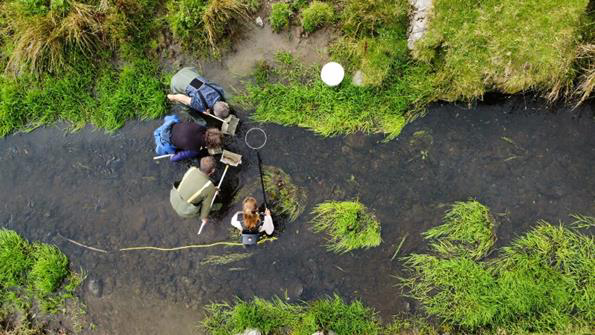
An electric current is put through the water in short time periods, to temporarily stun fish so that they can be caught. To ensure that the fish are not harmed, an e-fish backpack is used by trained individuals at SCRT.
The e-fish backpack has three main parts, the Anode (ring), Backpack (power source) and Cathode (tail). The backpack is set to the appropriate voltage and frequency, dependent of target species and watercourse conductivity. A current is then produced between the anode and cathode. Any fish around the anode are stunned for a couple of seconds and float to the surface, where volunteers can catch them with a net. The survey is then repeated until a 50 metre reach has been surveyed, zigzagging upstream.
Once completed, all fish caught are identified to species and recorded. Target species, such as Salmon, Trout and Eels are also measured so that different age groups can be distinguished.
All fish that are caught during electrofishing surveys are returned unharmed to the same 50 metre stretch of the river from where they were caught.
What do we do with the data collected?
At the end of the season, a report detailing all of SCRT’s surveys is written and released. Alongside this, our webpage, showing data and trends from previous years, is also updated. In the Duddon in 2022 we concluded:
‘A total of 5 sites were surveyed in the Duddon catchment in 2022. Sites were largely decided upon due to their locality to ongoing or future work by SCRT. Three sites at the upper end of the catchment, Roudley Beck, Cockley Beck and Dale Head Beck buffer strip creation has been agreed, with fencing and tree planting to be completed along Roudley Beck by March 2023. Trout parr and salmon were found to be absent in all three becks, whilst trout fry were classified as poor, except for Roudley Beck where they were classified as fair (National Fisheries Classification).
Along all three becks there is visible livestock poaching (ie. prolonged walking and standing by livestock causing damage to grass and soil) which is likely to have caused increased nutrient and sediment run-off into the becks, decreasing the quality of habitat for spawning.
The remaining two sites, Tarn Beck and Long House Gill are situated within the central reach of the catchment. Whilst salmon were still absent, trout populations were found to be more positive than in the upper catchment sites. Despite this, parr were classified as ‘very poor’ and ‘poor’ respectively (National Fisheries Classification). Trout fry were also found to be ‘poor’ in Tarn Beck, which is in-line with records from a separate section of the Beck surveyed in 2021. This is likely to be influenced by factors such as physical modifications, which have been identified along Tarn Beck. Fry populations at Long House Gill were recorded. The beck is steep sided, with little opportunity for high run-off into the beck upstream, however, tree cover could be improved. Eels were also identified within two sites, Cockley Beck and Long House Gill.
All the sites surveyed in 2022 are within the area of a United Utilities funded project, allowing SCRT to be active in the catchment and improving aspects of water quality.’
Want to find out more?
If you would like to read more of the report, or see how trends have changed, please use the links below:
Report: https://scrt.co.uk/scrt-electrofishing-reports/ Website: https://scrt.co.uk/electrofishing-map/
We will also begin advertising our e-fishing days from the start of July, so keep an eye on our website here: https://scrt.co.uk/events/
Salmon and Trout Terminology
Alevins – eggs laid in gravel beds hatch into ‘alevins’ (c. 1
inch long) which live in the gravel and feed off the yolk sac.
Fry – alevins grow into ‘fry’ which emerge from the gravel
but stay in the area they hatched.
Parr – these are young fish (c. 6 inches) that leave the site
where they hatched and have dark markings on their sides.
Smolts – between two and five years of age the fish
become a certain size, lose their parr markings and are
then known as ‘smolts’. They are ready to run
Balm Bashing Summary 2022
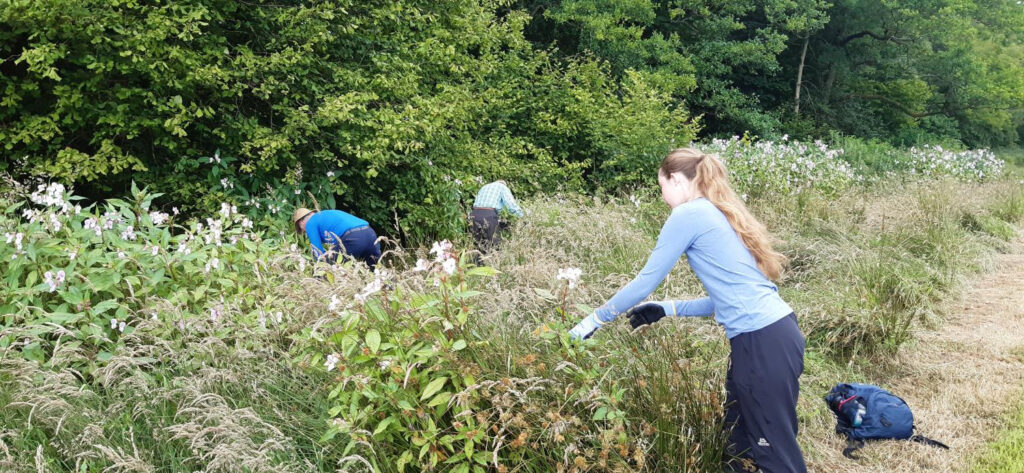
Last summer our Chair, Rick Browne, led our efforts to remove Himalayan balsam from the banks of the Duddon, both pulling up plants when he was out walking and also by organising several successful volunteering events, ably assisted by Secretary Steve Benn and many enthusiastic volunteers. Here, Rick summarises the work that was done and shares the plans for this summer as we aim to deliver on one of our most important objectives: to rid our catchment of this invasive, dominating plant before it has the chance to take over, as it has done in other river systems in the UK.
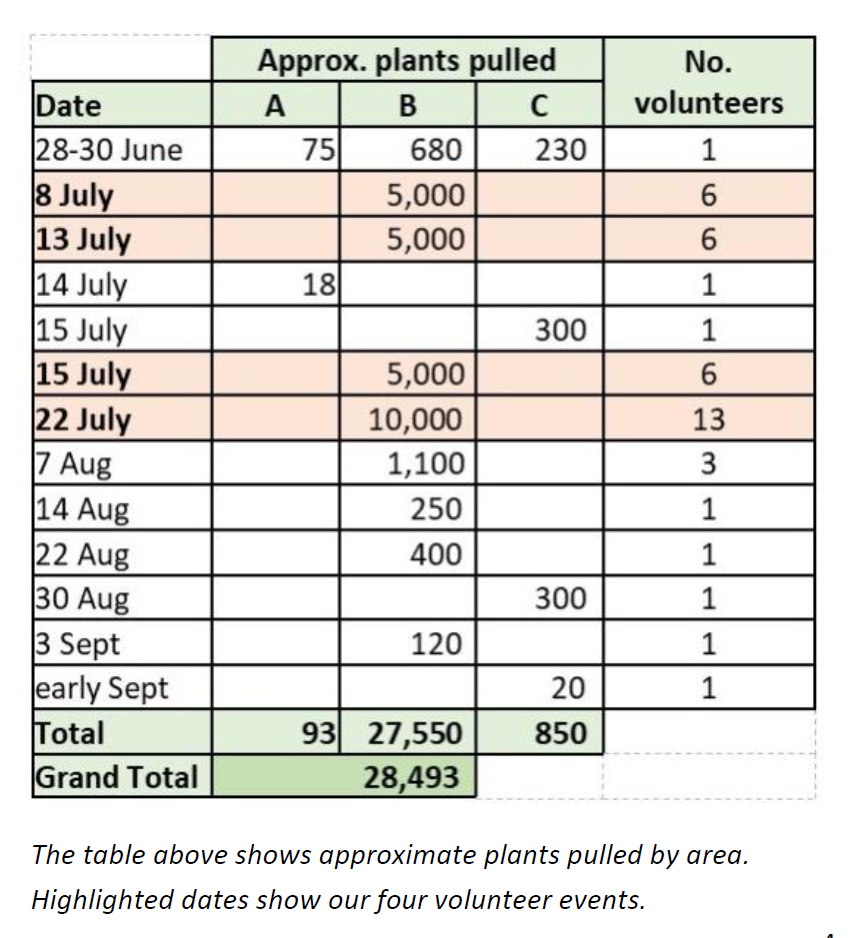
My balsam bashing activities last summer started at the end of June ’22 and continued through the summer until the beginning of September. During this time, we held four volunteer sessions, including one where we had an enormous turnout of 13 volunteers. Many hands really do make light work, and it is incredible and very satisfying to see the difference a team can make in a couple of hours.
The areas of focus in 2022 were:
Area A: at the end of the Corney Fell Road on the west bank of the river
Area B: below Duddon Bridge along the Broughton Bank footpath
Area C: At the end of the Ulpha Road behind the wall on the Broughton side
My initial explorations found that the area below Duddon Bridge was particularly badly infested with plants invading through the hedge into the field edges. It was obvious that help would be needed here given the magnitude of infestation.
The first volunteer working party was held on the 8th July with an estimated 5,000 plants destroyed. Subsequent volunteering events on 13th, 15th and 22nd July saw thousands more balsam plants pulled up, and I continued to monitor the area and remove new plants and plants that we had missed through the rest of the summer.
By mid July the area at Corney Road end had been completely cleared and I saw no more plants there for the rest of the summer.
Keeping score of the number of plants pulled not only shows what we have achieved, but also means we can compare our progress year on year until we eradicate Himalayan balsam completely. It is incredible to think that we pulled a total of approximately 28,000 plants between us – really amazing work! It will be interesting to see how the numbers this year compare.
As we are about to start our 2023 balsam bashing season, we all need to be vigilant along the entire length of the river. It would be a great help if you could report any sightings by emailing duddonriverassociation@gmail.com and we will arrange for the area to be visited. By spotting even a few plants quickly, we can avoid rapid spread and the need for significant amounts of work later this summer.
As well as revisiting the 2022 areas to pull up any remaining plants, the new areas that we plan to tackle this summer are at The Green and The Hill on roads leading down towards the marsh. We will be starting balsam bashing at the beginning of June and would appreciate volunteers to help. It is hugely satisfying to pull up balsam, which due to its shallow roots doesn’t offer much resistance, and seeing the immediate positive impact is very rewarding.
This year’s volunteer dates are:
Saturday 3rd June
Tuesday 20th June
Tuesday 27th June
Sunday 2nd July
Monday 3rd July
Sunday 9th July
Thursday 13th July
Sunday 16th July
All sessions start at 10.00am and finish around noon. Depending on our progress we will add more dates later in the summer if they are required. To join a session and for details of the meeting place, please email duddonriverassociation@gmail.com. We’ll also post updates on our Facebook group.
Volunteers should bring gardening gloves and wear suitable old clothing (long sleeved tops and long trousers are suggested due to brambles, ticks etc.) wellies, sunhat/sunscreen or waterproofs depending on the weather. Bringing a bottle of water is a good idea too as it can be thirsty work!
If you can’t make these dates but are happy to go out on your own, then please feel free to do so whenever suits you. It would be helpful if you could let us know roughly how many plants you pulled and from what location, and please don’t forget to ask for permission from landowners. If you need any help with landowner permission, please email duddonriverassociation@gmail.com
Finally, I’d like to personally thank the many volunteers who helped us this year, especially John and the team from Restoring Hardknott Forest who supported this initiative. I hope that you’ll all join us again at this summer’s Himalayan balsam bashes!
What is Himalayan Balsam?
It might look pretty, but Himalayan balsam is completely devastating when it comes to biodiversity!
As the name suggests, this plant was introduced to the UK from the western Himalayas in 1839 and has become one of the UK’s most invasive species. It is quite distinctive and easy to spot and is frequently seen by rivers:
Attractive pink-purple helmet-shaped flowers that havespot-like markings on the petals
Thick and hollow stems that turn from green in thespring to red later in the year
Large shiny green leaves that are oval in shape withserrated edges
Grows in dense clumps and reaches heights of wellover two metres.
Himalayan balsam quickly colonises entire river banks, successfully competing for light, space, nutrients and pollinators, and displacing native vegetation and reducing biodiversity. Its seed heads literally explode, showering hundreds of seeds across a wide area up to 7 metres away from the plant. Seeds remain viable for two years and can even be carried down the river spreading it further.
Additionally, when Himalayan balsam dies back in the winter the soil becomes exposed resulting in erosion of the river banks, endangering other vegetation and trees. Its shallow roots also mean that when river levels are high it can be swept down the river where the dead leaves and tough stems cause blockages which can lead to flooding.
Listed on Schedule 9 of the Wildlife and Countryside Act 1981, it is an offense to plant or cause Himalayan balsam to spread in the wild.
Upper Duddon Landscape Recovery
By John Hodgson, Restoring Hardknott Forest
A group of farmers, landowners and environmental organisations have successfully formed a partnership to work together to plan landscape-scale nature recovery in the upper Duddon Valley.
The DEFRA-funded Landscape Recovery scheme is designed to work with farmers and other land managers to manage the land in ways that will improve soil and water quality and reverse the decline in nature.
The Upper Duddon partnership is one of 22 successful projects selected across England. In January 2023 the project started a two-year development phase to scope out potential options to farm and manage the land in ways that will help nature thrive and recover. At the end of this development phase local farmers involved in the partnership will have the option to enter a 20-year scheme to implement the changes on their land that they have helped design.
The development phase will work with farmers to explore how existing agri-environment schemes could be enhanced and expanded, with farmers receiving payments for environmental benefits provided. The scheme will also develop the work of existing environmental projects in the upper Duddon.
The Restoring Hardknott Forest project will continue to work with Forestry England to restore native woodland on their site. The South Cumbria Rivers Trust will explore possible river restoration work on the upper Duddon and its tributaries. The University of Cumbria’s Back On Our Map project will contribute their expertise on the recovery of rare flora and fauna. Other partners include the National Trust and the University of Leeds.
The work is likely to explore options for restoration of native woodland, wood pasture, heath, scrub and peat bogs. It will also include the necessary feasibility studies to enable the future restoration of rare species, potentially including water voles, globeflowers, tree pipits and pine marten. This long-term partnership will help ensure a vibrant future for small farms in the Upper Duddon and will provide employment for local people through the creation of new jobs.
During the two-year planning phase there will be opportunities to find out more at local meetings and site visits, and from the organisations involved. View our interactive story map here.
If you’d like to find out more please contact John
Hodgson (j.h.hodgson@leeds.ac.uk) .
Join us for our Tarn Beck Guided Walk in the Upper Duddon on Thursday 10th August and have the chance to find out more about this exciting project – see page 8 for full details and how to register.
Instagram: Can you help?
Do you enjoy taking photographs or video? Do you have an interest in the river environment or nature? Are you good at research or knowlegeable about wildlife or the countryside? Are you often out and about in our catchment area?
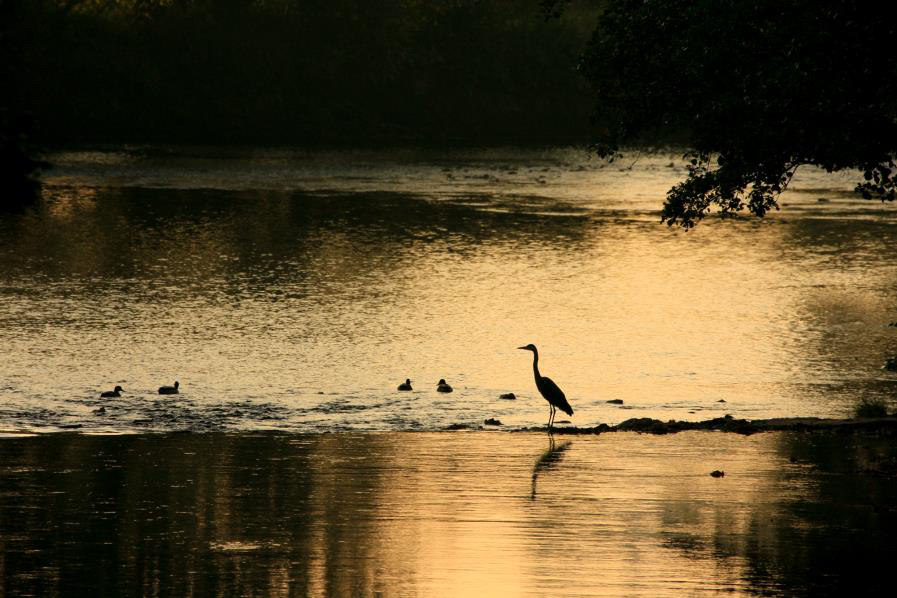
We are looking for some help with producing content for our Instagram account. We have had some amazing photos and videos given to us already; a massive thank you to those who have already done so, especially Lindsay McCrae who has kindly shared his stunning photography with us, Bradley Troughton for his fabulous drone footage and Rick Browne for his many river photos and video updates. A big thank you also goes to Hannah Teagle for her excellent reporting of SCRT events and to James Pennefather for his nature writing on everything from birds to pollution!
It would be a huge help if members could send in photos or videos and observations or information to accompany them on any relevant content: anything to do with the river, the valley and the landscape, wildlife, fish and fishing, farming, conservation, weather, seasonal sights… literally anything interesting about our catchment!
If you can help please send through any content to Pam at duddonriverassociation@gmail.com or get in touch with her for more details.
Tree Planting Success
By Hannah Teagle
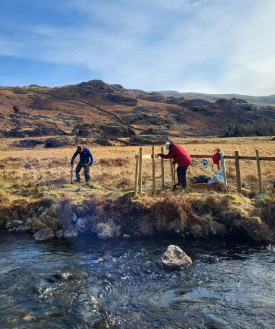
Season 2022-2023 saw SCRT plant more trees is South Cumbria than ever before, including planting 1,000 trees in the Upper Duddon Catchment. All of the trees were planted with the help of volunteers, including several members of the DRA.
The work was carried out as part of the United Utilities funded Raw Water Project, which aims to improve water quality and increase water storage in the Duddon and Poaka Catchments.
Seven hundred trees were planted along bufferstrips installed in summer 2022. Bufferstrips are a strip of vegetation along the riverbank, creating a barrier between the watercourse and agricultural land. These were created along three becks to reduce livestock access to the beck, reducing poaching and reducing sediment and nutrient run-off in the watercourse.
The remaining 300 trees were planted along Tarn beck, to increase absorption of run-off and shading over the beck. Increasing shade over a watercourse can help mitigate against climate change by reducing the amount of sunlight reaching the water, helping keep it cool.
Tarn Beck Guided Walk & Social Event
We are very pleased to announce our first ever DRA guided walk, to be followed by informal drinks at the Newfield Inn.
Date: Thursday 10th August
Guided Walk: 2.30pm
Social Event: 5.00pm
he guided walk will take place around the Tarn Beck/High Tongue area in the Upper Duddon catchment, and will be in the company of the people who really know the land in this area and are closely involved in the Upper Duddon Landscape Recovery Project including: Steve Jolley (National Trust), Paddy Deady (Troutal Farm), Hannah Teagle (SCRT) plus a representative from Restoring Hardknott Forest.
The walk will be a great opportunity to see what has already been achieved in this beautiful part of the valley and hear about the exciting plans for the future. There will also be plenty of opportunities to ask general questions about conservation and river management.
Following the walk we will make our way to The Newfield Inn (Seathwaite) for an informal drink and the opportunity for our members to get to know each other.
All are welcome to join us, but please note that the area we are walking in requires a good level of general fitness and the ground is very uneven in places. Please wear walking boots and suitable clothing for the weather conditions, and come prepared with a water bottle, sunscreen, etc.
Looking forward to seeing you there!
DRA Diary Dates
Sat June 3 | 10am-12pm | Balsam Bashing
Sat June 10 | 1pm-4pm | DRA at Thwaites Gala *
Tues June 20 | 10am – 12pm | Balsam Bashing
Tuesday June 27 | 10am – 12pm | Balsam Bashing
July
Sunday July 2 | 10am-12pm | Balsam Bashing
Monday July 3 | 10am-12pm | Balsam Bashing
Sunday July 9 | 10am-12pm | Balsam Bashing
Thrusday July 13 | 10am-12pm | Balsam Bashing
Sunday July 16 | 10am-12pm | Balsam Bashing
August
Thursday August 10 | 2:30pm | Tarn Beck Guided Walk
Thrusday August 10 | 5:00pm | Social @ The Newfield Inn
For more information on locations and to register for these events please email duddonriverassociation@gmail.com
(*registration is not required for the Thwaites Gala)
SCRT Events
Electrofishing and Riverfly Survey training days are run by SCRT. Please see their website for dates and more details: www.scrt.co.uk/events
Restoring Hardknott Forest Diary Dates
Sun 11th June – Volunteer Day, Eskdale
Thurs 15th June – Dry Stone Walling for Beginners
Tues 20th June – Dry Stone Walling for Beginners
Tues 27th June – Volunteer Day, Eskdale
15—17/18th Sept – Autumn Residential Weekend
Duddon River Association Contact Details
Email: duddonriverassociation@gmail.com
Facebook Group: www.facebook.com/groups/724478118674632 Instagram: duddonriverassociation
Chair: Rick Browne
Secretary: Steve Benn
Social Media/Newsletter: Pam Pennefather