Autumn is well and truly here. If braving the weather is a slightly less appealing that it was in the summer, we hope that this newsletter will give you something interesting to read, whilst keeping warm and dry inside.
In this issue, we report on our herculean Himalayan balsam bashing efforts – a subject very close to my heart – that many of you have been involved with over the summer. Plus there are electrofishing results, updates on progress with leaky dams, a lovely article on pied flycatchers and an introduction to Cumbria Wildlife Trust’s Duddon Valley Support Group. There’s also a fantastic article on our first ever Guided Walk which took place in August in the Upper Duddon valley. The event was very well attended and concluded with an enjoyable pint at The Newfield Inn!
The success of this past year has been down to our incredible volunteers who have so generously given their time, and without whom we would not have been able to achieve so much. I wanted to take this opportunity to say a big thank you. Whether you have helped with balsam bashing, tree planting, building leaky dams, e-fishing or riverfly surveys or by providing content for our social media or newsletter, your effort and contribution is very much appreciated!
If you haven’t managed to volunteer yet, then please do consider getting involved – we are a friendly bunch and it is very rewarding to make a difference.
Looking forward to next year, our AGM will be held on Tuesday 20th February 2024 – full details can be found in the Diary section on page 12. I hope that many of you will join us as we plan our activities for 2024.
If you have comments or questions, please email duddonriverassociation@gmail.com. You can also follow us on Instagram or join our Facebook group to keep up to date with our news and events.
Best wishes,
Rick Browne (DRA Chair)
2023 Balsam Bashing Bonanza!
By: Rick Browne
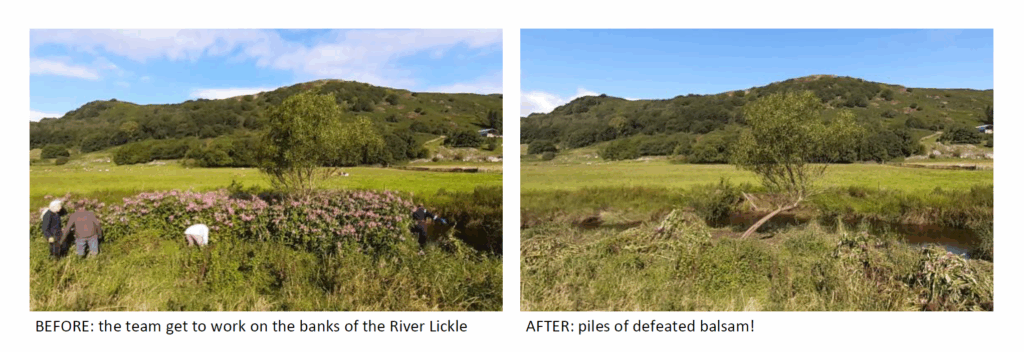
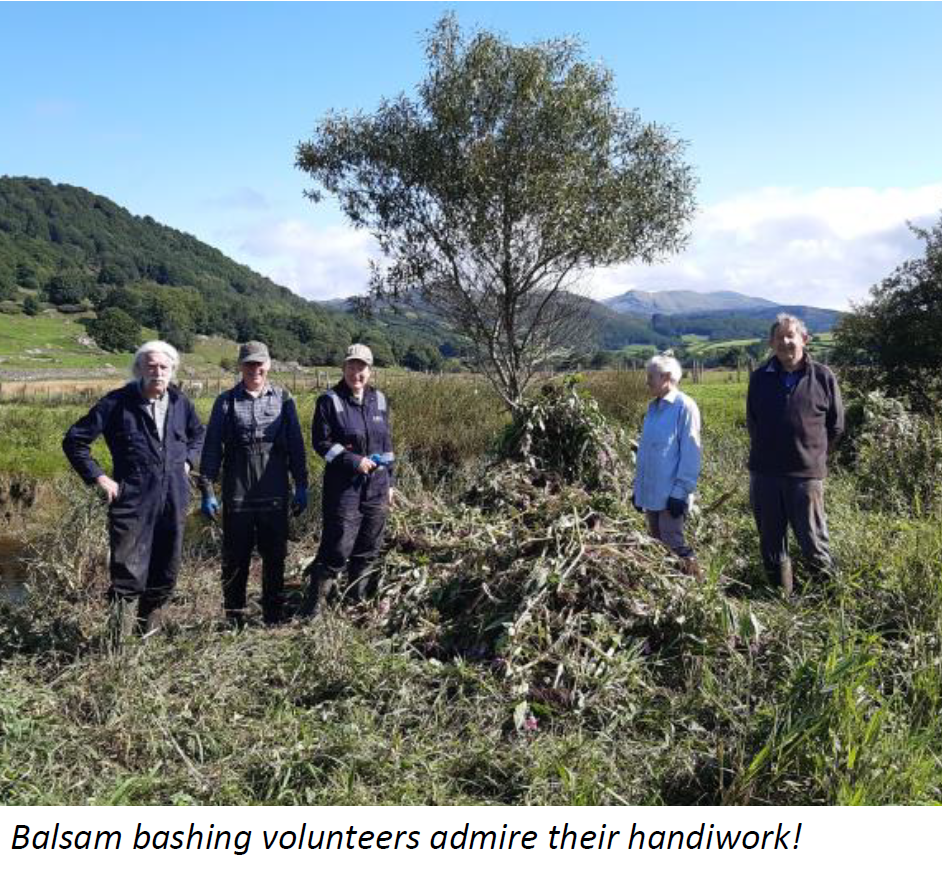
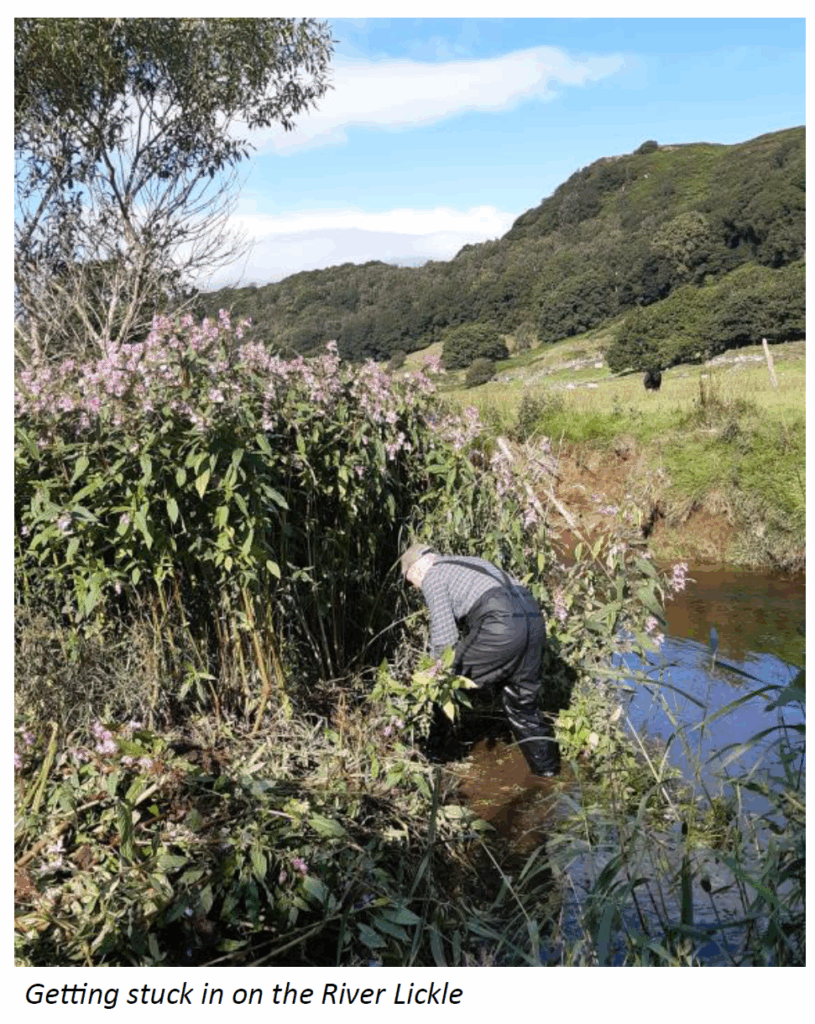
Without doubt, 2023 has been our biggest balsam bashing year yet. Once again, our Chair, Rick Browne,
has led our efforts to remove Himalayan balsam from the banks of the rivers in our catchment. Rick’s
mission to eradicate this dominating invasive, along with the help of a team of incredible volunteers, has meant
that we bashed almost three times as many balsam plants compared to last year. Rick summarises the season’s
results as we attempt to eradicate this dominating plant from our river system…
This year, our biggest accomplishment has been to greatly expand the areas where balsam has been controlled. Whereas in previous years we have only worked in the lower Duddon, this year not only did we return to the 3 areas there, but we also attacked new areas on the lower Lickle, Black Beck, Thwaites Hall, Green Road, Underhill and Broughton Mills. We organised a grand total of 11 balsam bashes (versus only four last year) and these plus other informal sessions have enabled us to pull out more plants than ever before!
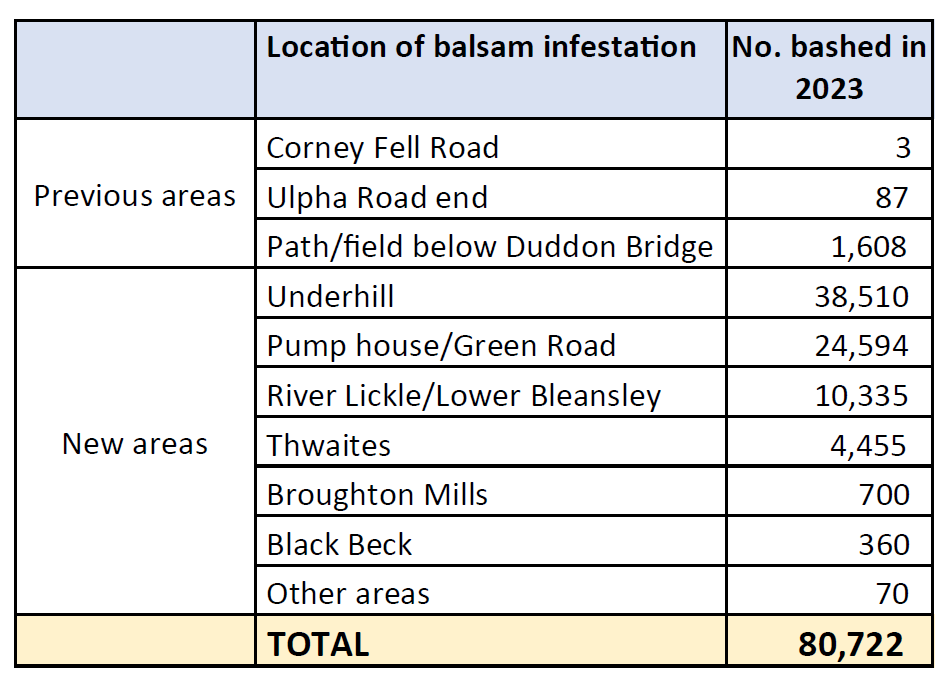
To give us data for annual comparisons to be made, we count the number of plants pulled out on each work party. The data for this shows that compared to 2022 when we pulled a total of 28,500 plants, this year we pulled over 80,700. A phenomenal increase!
Bashing balsam really works – the areas we focused on last year show a massive improvement. The success of our control measures can been seen using the comparative figures for the three areas around Duddon Bridge that we have worked on over the past two years:
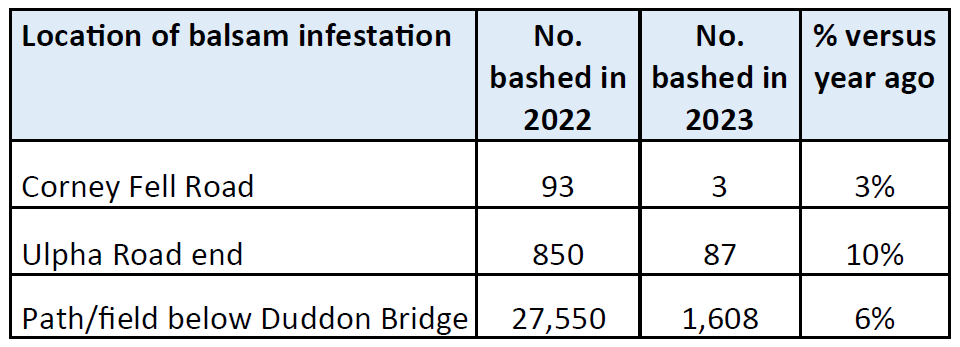
This also demonstrates the need to follow up progress with conscientious work in subsequent years to eradicate balsam completely. I believe that this year, in these three areas, we pulled up all the plants before they had a chance to seed, however seeds can lie dormant for a couple of years, and also the odd plant can be missed, even by eagle eyes. We need to be continually observant and diligent about revisiting these areas.
The new areas tackled this season were extremely heavily infested and have been for many years. These areas are shown, along with the number of plants bashed this year in the table on the next page. There was so much work to do on these large areas that although we made good progress, we did not manage to get all the plants out before they set seed.
The priority for next year must be to get more volunteer hours in June and July to minimise seed Zproduction and reduce the work load in 2025. We must also identify new areas for control so please report any relevant information.
I have heard a couple of misguided opinions that the flowers are good for bees and we should not be pulling them out! A reminder about why balsam is so destructive can be seen on the opposite page, so please share this information to help educate people about why these pretty flowers just have to go!
A big thank you to all the volunteers who gave their time and sweat on the work sessions: Gareth, Fiona Steve, Ewan, Pam, Lizzie, Richard, Gill, Lindsay, Tania, Mike, Sten, Angela, Celia, Neil, Elaine, Jean and Peter. Pulling balsam is a good physical work out in the fresh air and therapeutic, leaving a sense of satisfaction and achievement – why not give it a go next year?!
The Three Reasons to Bash Balsam
Himalayan balsam is a familiar sight on many of the UK’s waterways, however, its attractive flowers belies the devistating effect it hsa on the riverine environment.
- Bad for biodiversity – Himalayan balsam can colonise and dominate entire river banks as it outcompetes our own native species for light, space, nutrients and pollinators. The photo above shows the bare ground revealed after removal of a patch of balsam and demonstrates that almost nothing is able to coexist alongside balsam.
- Leads to soil erosion – Balsam contributes to soil erosion of the river banks when it dies back in winter, endangering trees and other plants.
- Causes flooding – Himalayan balsam’s shallow roots also make it susceptible to being swept down the river during floods, where the dead leaves and tough stems cause blockages which can lead to flooding.
Other invasive species
Himalayan balsam is not the only villain of the river bank – we have also found the following invasive species in our catchment…
Japanese Knotweed
Unfortunately this has appeared near Duddon Bridge this year, but will be treated by a qualified contractor.
Skunk Cabbage
Last year, 19 plants were removed near Duddon Bridge, but thankfully no plants have been spotted this year.
Can you help us locate invasive species?
If you spot any invasive species in our catchment, please post it on our Facebook group or email us so that we can take appropriate action.
What lies beneath: Electrofishing survey update
By Hannah Teagle, SCRT
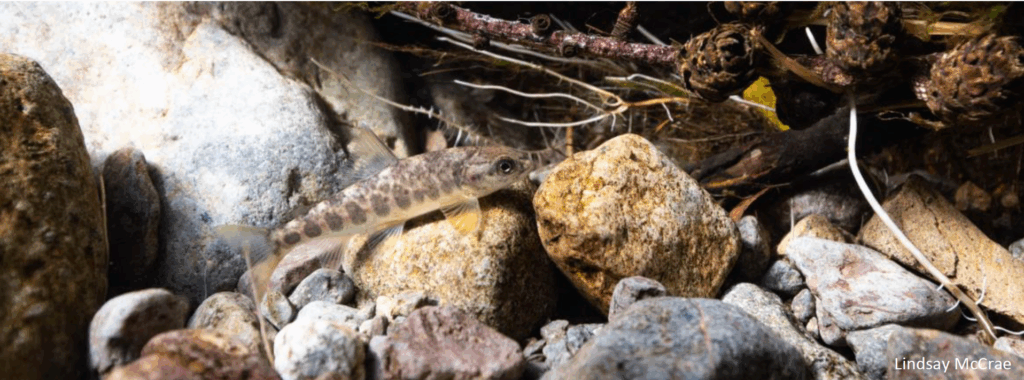
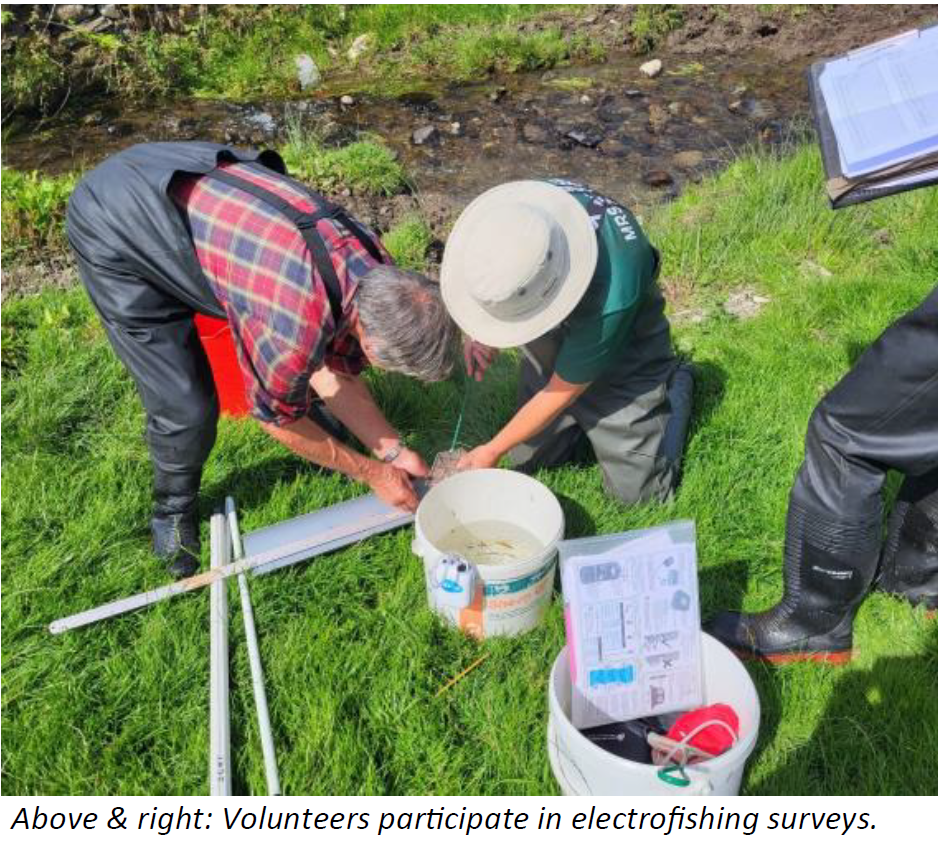
South Cumbria Rivers Trust and our amazing volunteers have been busy completing another year of electrofishing surveys in the Duddon Valley.
Following on from an article in our last newsletter which explained electrofishing surveys and how to get involved, (Focus on: Electrofishing, Issue 1: June 2023, page 3) Hannah Teagle shares the latest results from this year’s surveys with us…
So far, a total of five sites have been surveyed in the Upper Duddon. Sites were selected by their locality to SCRT projects, and sites where surveys had been completed in previous years to allow for comparison.
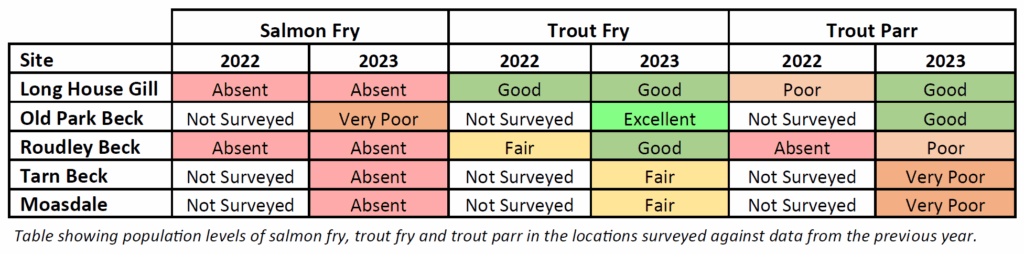
Population levels are categorised by the National Fisheries Classification system, which ranks populations from Absent to Excellent.
Two of the survey sites, Roudley Beck and Long House Gill were repeats of surveys carried out in 2022. Roudley Beck had been selected, as fencing was installed by SCRT in 2022, creating a bufferstrip to protect the banks from livestock poaching.
In both 2022 and 2023, Salmon were absent at both Roudley Beck and Long House Gill.
At Roudley Beck, both Trout Fry and Trout Parr populations had improved; from fair to good for Trout Fry, and absent to poor for Trout Parr. This improvement may have been influenced by the reduced livestock access and poaching in the beck. Tree planting in the bufferstrips is also hoped to increase shaded areas, allowing for refuges for fish in the future.
Populations at Long House Gill saw Fry populations remaining at good and Trout Parr populations had improved from poor to good.
The remaining three sites surveyed were on Tarn Beck, Old Park Beck and Moasdale. The lowest number of fish caught were at Tarn Beck (9 fish caught) and Moasdale (8 fish caught) – this compares to the highest number of 63 caught on Old Park Beck. This is likely to have been impacted by high flow levels as both surveys were completed after heavy rain. Again, no Salmon were found. Trout Fry and Parr levels were fair and very poor at both sites.
Duddon River Art: The Friends of the Lake District’s ‘Landscape Grants’
By: Steve Benn
The Duddon River and surrounding catchment is not just important from a farming, conservation or fishing perspective. Many locals and visitors appreciate the area because of its scenery.
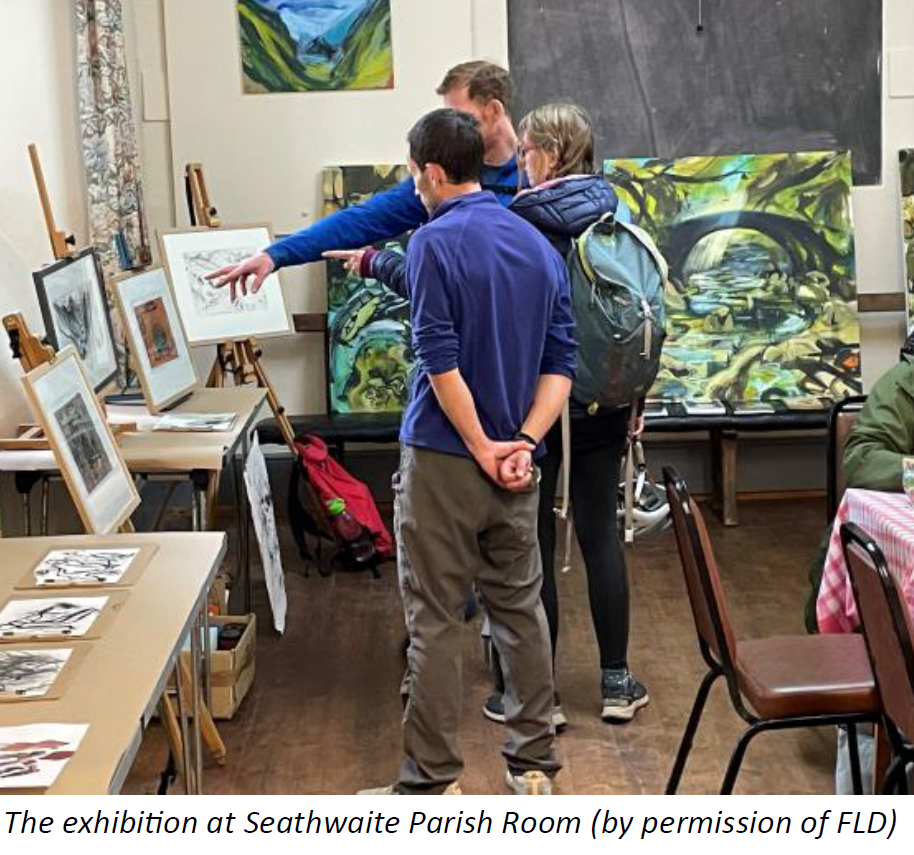
Landscape is very important to many of us as a ‘sense of place’, and staff at the Friends of the Lake District (FLD) are very aware of this. One of the recent FLD ‘Landscape Grants’ was awarded to Seymour Fine Art and Cole’s Gallery, and funded a painting trip that followed the River Duddon from source to sea. We thought this may be of interest to our DRA members.
FLD Landscape Grants support artists to visit the Lake District, to engage with the landscape, heritage, and conservation of the Lake District and to promote sustainability in materials. Painters, writers and actors documented and produced work for an exhibition inspired by the journey, the future conservation of the river and its poetic history.
The Duddon River art exhibition was hosted in the Seathwaite Parish Room (in the Duddon Valley) and is also due to be exhibited at Coles Gallery in Leeds (from 26th October to 10th November 2023). Should we hear details of any additional future local dates we will share these on our Facebook Group.
More information on FLD Landscape Grants and Coles Gallery can be found at:
https://www.friendsofthelakedistrict.org.uk/news/
landscape-grants-back-in-full-swing
https://www.colesgallery.co.uk/
Cumbria Wildlife Trust: Duddon Local Support Group
By: Elaine Essery
The Duddon Local Support Group (LSG) supports the Kendal-based Cumbria Wildlife Trust (CWT). It is steered by a small committee of local people and arranges events to cater mostly – but not exclusively – for those in the LA17, LA18, LA19 and LA20 postcode areas.
We hold illustrated talks on the second Friday of the month from October to March at Thwaites Village Hall, The Green, LA18 5HJ at 7.30pm. Our aim is to entertain and inform; the talks last for around an hour, with questions, followed by refreshments and a chance to chat to fellow wildlife enthusiasts. Topics have included: bats of Cumbria, beavers, butterflies and moths, CWT reserves, looking after Duddon River, marine conservation, natterjack toads, protecting our woodlands, red squirrels, sand dune conservation, swifts, unusual insects, where to look for birds, wildflowers, wildlife in winter: something for everyone. Members and non-members are welcome. We suggest a donation of £3 per person, which includes refreshments, with all proceeds going to CWT headquarters to help fund the Trust’s work.
We also arrange occasional guided walks during the summer where local experts help us identify and learn more about various species and projects. Examples include, natterjack toad walk (Haverigg), Birds and Breakfast walk (Broughton), a mushroom foray, a visit to the Restoring Hardknott Forest project, walks on the Monk Coniston estate, Lowick Common and South Walney reserves. Walks are free of charge but donations are welcome.
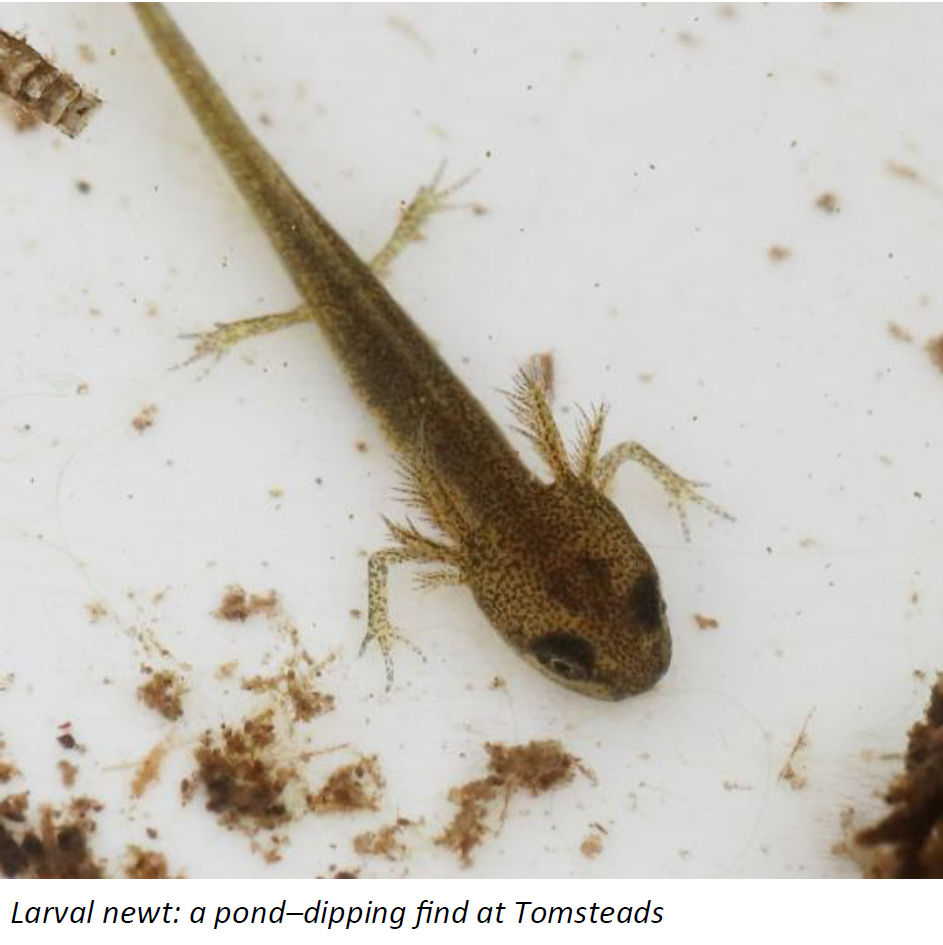
An open garden day at Tomsteads near Broughton-in- Furness, the home of one of our committee members, has become an annual fun and fund-raising event in June or July. Tomsteads boasts a seven-acre, mixedhabitat wildlife haven: a perfect location for a wildlifethemed event to help connect people with nature. Dragonflies, damselflies and other insects love the garden; kingfishers occasionally visit; deer browse in the wooded areas; frogs, toads and newts breed in the ponds; and there have even been several otter sightings.
Open days feature guided walks to identify the many insect, plant and bird species found there. The overnight moth trap is a fascinating and popular attraction: typically it reveals 20 or more species – most of which can be identified by our knowledgeable experts. Pond-dipping sessions have children and adults engrossed for long periods, as young newts, water boatmen, damselfly larvae, leeches and more can be discovered. Staff from CWT headquarters are on hand to share their knowledge and enthusiasm, or visitors can just wander as they please, enjoy the garden, sit and have refreshments. A well stocked bottle tombola stall adds to the fun.
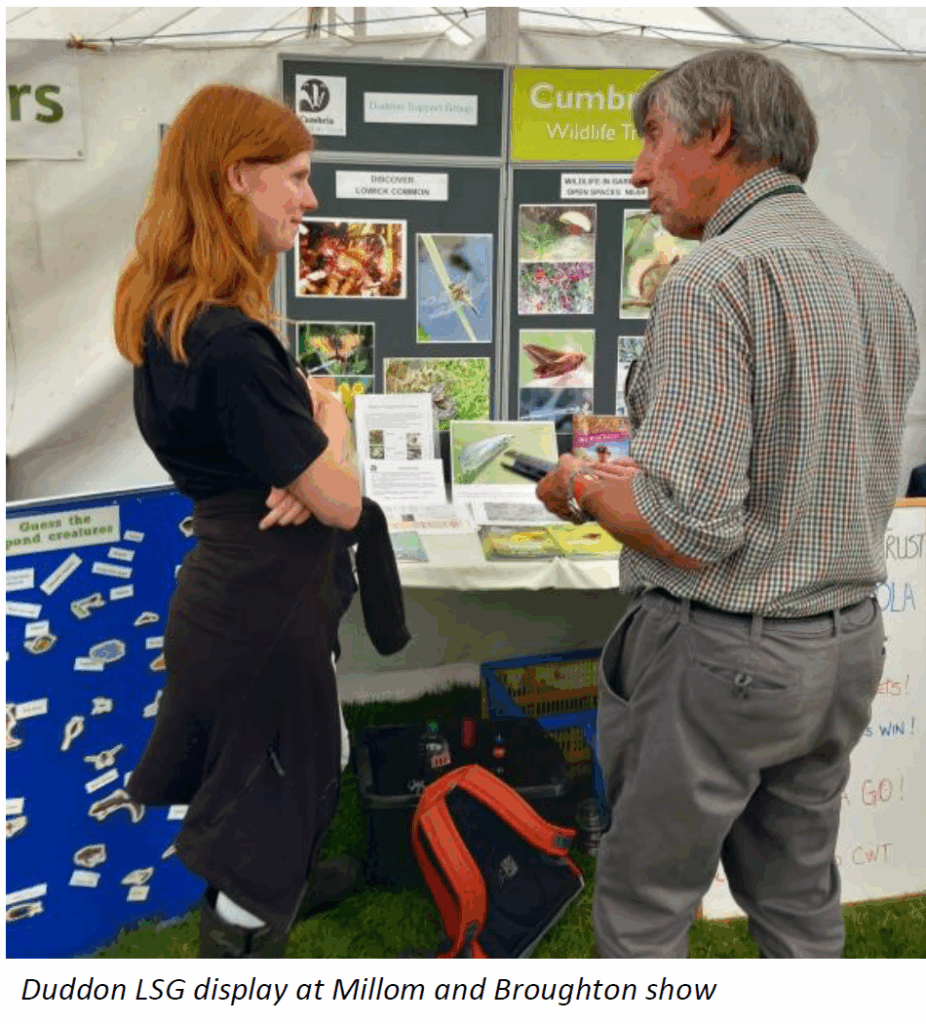
To help raise the profile of the wildlife around us and the activities of our group, Duddon LSG hosts a stand at Millom and Broughton Agricultural Show. We have also sponsored wildlife-themed competition classes for children at the show to get the younger generation thinking about how we can protect the natural world.
In 2018, Lowick Common was gifted to CWT; at 113 hectares by far the biggest gift of land ever to have been received by the Trust. CWT spent time assessing the wildlife on the site and consulting local people and has drawn up a management plan. Its vision is to create a mosaic of grassland, wetland, woodland, heath and scrub where wildlife can thrive and be enjoyed by people. Duddon LSG has now ‘adopted’ Lowick Common, its nearest CWT nature reserve.
Alongside the reserve manager, we organise small group work parties to help clear bracken and remove invasive Himalayan balsam. It can be hard work but very rewarding and a good opportunity to enjoy company, exercise and fresh air, the fantastic views from the site, and of course to spot the wildlife. That can be anything from leeches in a tarn, slow worms and great crested newts taking shelter, roe deer browsing on the heath, to kestrels hovering and swifts flying overhead.
We have also started to conduct regular formal surveys of butterflies, bumble bees, birds and dragonflies and damselflies (and informal surveys of reptiles and amphibians) to monitor and record the presence of various species on the site and their numbers.
For information about the CWT Duddon Local Support Group please email:
DuddonLSG@cumbriawildlifetrust.org.uk
You can join CWT from £3.50 per month. To join CWT
visit https://www.cumbriawildlifetrust.org.uk/join
Life and Wildlife in Lockdown
CWT Duddon Support Group’s next talk, ’Life and Wildlife in Lockdown’, takes place on Friday 10th November, 7.30pm at Thwaites village hall.
A chance to see a new slide show with a difference from the ever-popular Maurice Steele. Covid lockdown may have curbed our activities but Maurice took every opportunity to record what he saw close to his Eskdale home, where nature continued to thrive.
Booking is not required – please just come along!
Memorial Bridge
by Rick Browne
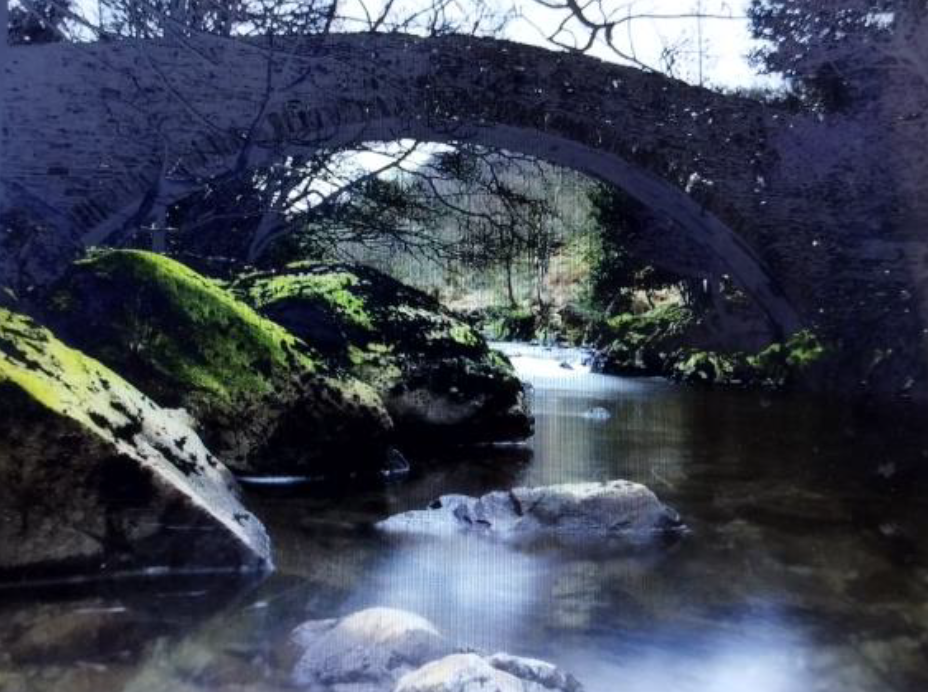
This beautiful bridge crosses the Duddon at the southern end of Wallabarrow Gorge. It is a narrow footbridge and a superb example of traditional stone building in its most impressive form.
Built in the early 1930s by W. Grisenthwaite it has two intriguing plaques on the wall. The letters ‘AB’, Greek letters Alpha and Omega intertwined with a star. Also the letters ‘AF’ and ‘RAF’. The latter led me to think the bridge was a memorial to early wartime pilots. In actual fact, the bridge is a memorial to an intrepid lady named Aida Borchgrevink.
Aida Borchgrevink was born in 1861 in California as Aida Starr. While on a trip up the Nile, she met a Norwegian barrister, Johan Borchgrevink, fell in love, and married him in 1882. They lived in Alexandria and sent their children to be educated in England. While touring the north of England they came to the Duddon Valley. Here they made a base at High Hollin House. Johan died in 1910 but Aida returned to the valley and spent lots of time there in the 1920s and 1930s until her death in 1931.
Aida’s daughter, Aida Foster, and a close friend Robert Allason Furness commissioned the bridge. The plaque represents Aida’s initials, AB. The Greek letters represent the beginning and the end. The star represents her maiden name and symbolises the ‘star’ her family and friends thought she was. The meaning behind the initials AF and RAF now become clear.
The bridge and Crag End Wood were presented to the National Trust in 1933. I would encourage anyone who has not crossed this bridge, to do so and also walk the Gorge path.
Thanks must go to Gail Batten and the Duddon Valley Local History Group for supplying this information.
The urgency of the Pied Flycatcher
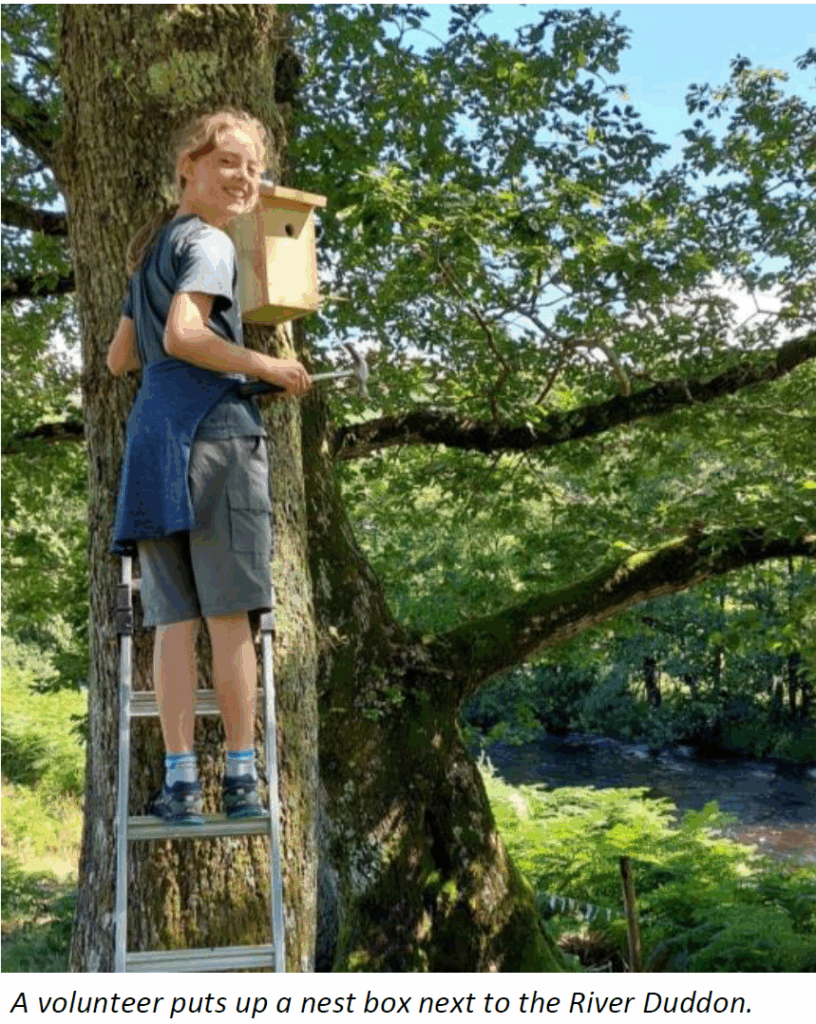
DRA Member, James Pennefather, shares his love of this little woodland bird, and his conservation efforts on the edges of the River Duddon where he has instigated a nest box programme, putting up 30 nest boxes in 2014 and another 20 this year.
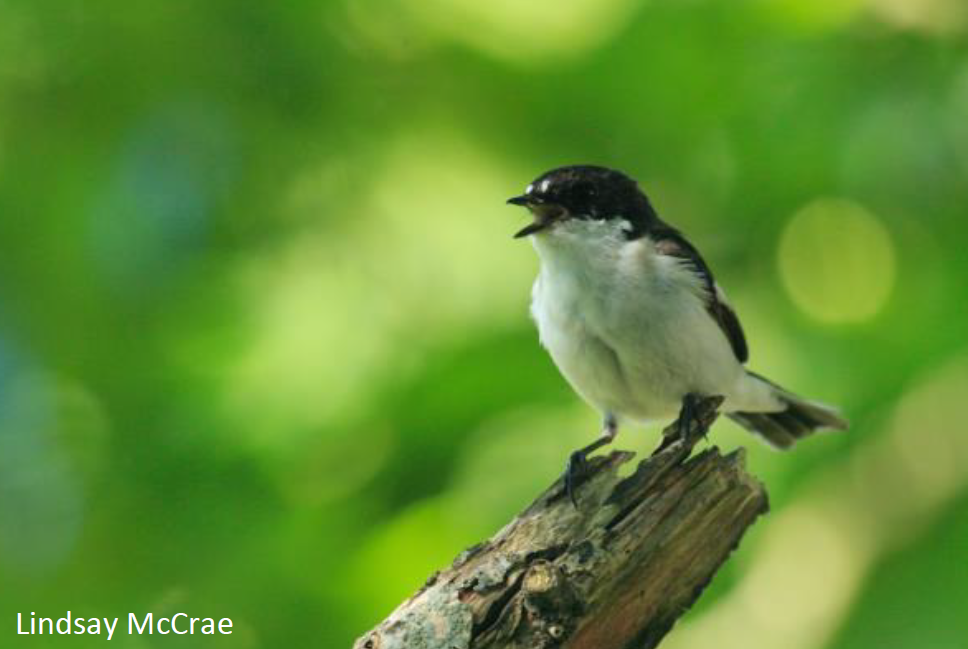
Iconic. Bold. Charming. Confiding. Characterful. That’s a lot of positive adjectives for such a diminutive black and white bird that descends on our western oak woodlands for only a few precious few weeks each spring. But it deserves them all.
As you can see, I’m quite a fan of the pied flycatcher, a migrant from West Africa. For me, the ‘see sawing’ song delivered by a male perched conspicuously on a branch to claim its territory is one of the classic sounds of the arrival of spring, up there with the cuckoo or swallow.
But there’s something else too: it’s the determination it displays in its quest to rear a brood that I find so rewarding. The same determination which was displayed when I once put up a nestbox and within ten minutes a pied flycatcher had appeared to claim its prize, gripping the rim of the hole with its claws and fanning out its black tail feathers for stability as it peered inside.
The males arrive from Africa in mid-April and must find and secure a suitable nesting site ahead of the arrival of the females a week later. Their preferred nests are holes chiselled out of oak trees by great spotted woodpeckers. But these holes are in short supply and are often claimed ahead of the flycatchers’ arrival by great tits who are resident year round and will claim nesting sites as soon as signs of spring are seen. Pied flycatchers are smaller than great tits and tend to be killed in the ensuing battle for the nesting site. The worst case scenario is apparently a mild winter (after which great tit numbers will be inflated) and an early spring (when the great tits will start nesting earlier than the arrival of the flycatchers). In such years, ten per cent of male pied flycatchers will lose their lives to great tits in battles over nesting locations.
Thankfully, conservationists have discovered that pied flycatchers will happily nest in manmade nest boxes, which increase the number of suitable nesting sites. In the woodlands around Duddon Hall, for example, a nest box programme has increased the number of territories from two to twelve in the past decade.
But even with nest boxes, it is still all a bit time sensitive. It has been estimated that each chick requires 1,500 caterpillars before it fledges. So the chicks need to hatch at peak caterpillar season to have the best chance of survival. To make it even more challenging, the burden of feeding the chicks tends to end up falling on the female alone. The males are polygynous and if they have enough suitable nesting sites they will often have started a second brood with another female before the first family has fledged.
That’s one of the reasons why the male pied flycatchers are one of the most conspicuous birds you will see in oak woodland in an English spring: they are not only claiming and defending at least one territory, but also trying to time their brood to have the best chance of survival.
In summary, it is all a bit of a mad rush. After all, the next generation of these charming birds could depend on it.
Valley-scale nature recovery in the Duddon Valley
Our first DRA Guided Walk on Thursday, 10th August proved a great success: a fabulous turnout, incredible weather, stunning views and some fascinating discussion led by experts from SCRT, Restoring Hardknott Forest and the National Trust. It was an incredibly enjoyable and interesting afternoon spent exploring the upper part of the Duddon Valley around Tarn Beck, and perfectly rounded off with drinks at The Newfield Inn afterwards! For those who weren’t able to make it, attendee Peter Walter shares his summary of the event below…
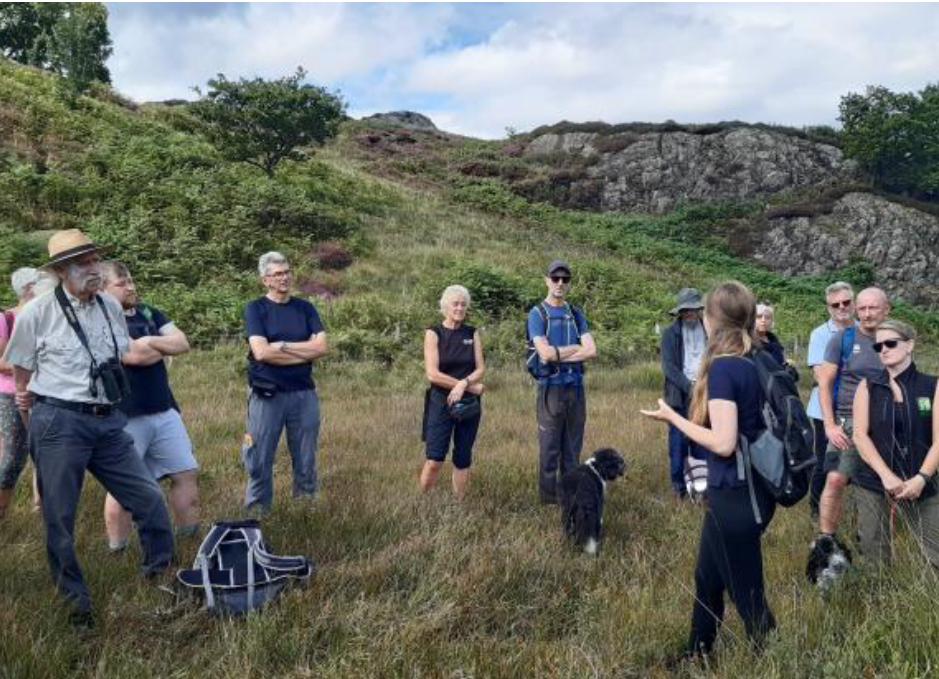
An amazing collective of people in the Duddon Valley are working together to make long term, valley-wide changes that will restore rivers, improve soil and reverse the decline in nature.
The Upper Duddon Landscape Recovery Project aims to restore nature over nearly 3,000 hectares; and protect and enhance species native to the area. With farmers at the heart of the project, the team are developing a way of land management that allows both farming and nature to thrive.
One of 22 projects to get a share of Defra’s £12 million Landscape Recovery fund, the project is being used as a ‘test bed’ for how future Environmental Land Management payments might work.
One of the reasons the project has hit the ground running, is that many of key people already have a good working relationship. The project builds on existing environmental projects in the area:
The Restoring Hardknott Forest project will continue to work with Forestry England to restore native woodland on their site. The South Cumbria Rivers Trust will explore possible river restoration work. The University of Cumbria’s Back On Our Map project will contribute to the recovery of rare flora and fauna. The National Trust and Natural England will continue to work with local farmers towards sustainable and environmentally -friendly land management. And Leeds University is overseeing the whole project and providing essential research and analysis.
I joined a group of interested parties to see the project on the ground and was struck by how much the local community were involved. Local people from all walks of life are making it a success – land owners, farmers, environmentalists and keen volunteers – helping build leaky dams, plant trees and carry out fish surveys.
In January 2023 the project started a two-year development phase. At the end of which, farmers involved will have the option to enter a 20-year scheme to implement the changes that they have helped design.
Peter Walter is a Member of the Lake District National Park Authority. He shared the above article with the 15 Parish Councils he represents in the North Lakes.
Want to find out more?
Here are some useful links to find out more about the agencies and projects that Peter refers to…
Upper Duddon Landscape Recovery (arcgis.com)
Restoring Hardknott Forest (leeds.ac.uk)
Upper Duddon Landscape Recovery (leeds.ac.uk)
South Cumbria Rivers Trust
Back on Our Map: South Cumbria Species Restoration
SCRT Patrons’ Event
By Steve Benn, DRA
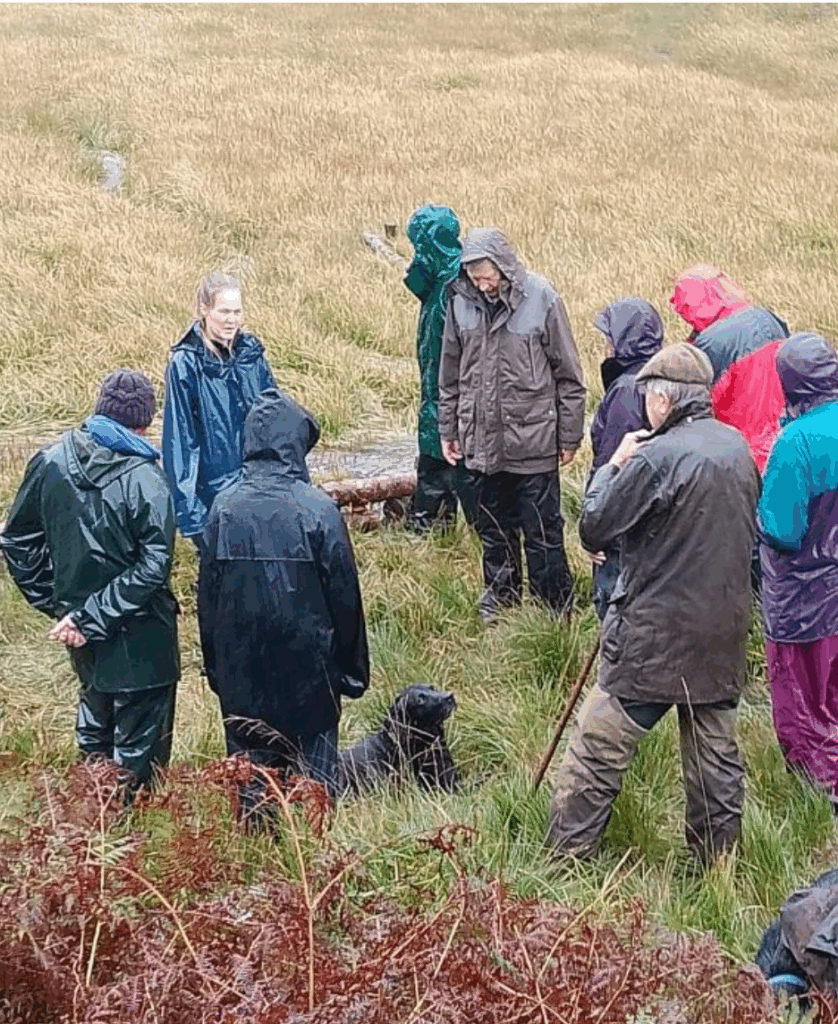
Tuesday, 19th September started off with a deluge of rain but with very high spirits from the 17 attendees (including Patrons, local farmer, Paddy Deady, South Cumbria Rivers Trust (SCRT) and National Trust (NT) staff, and DRA volunteers) for a visit to the Duddon Catchment.
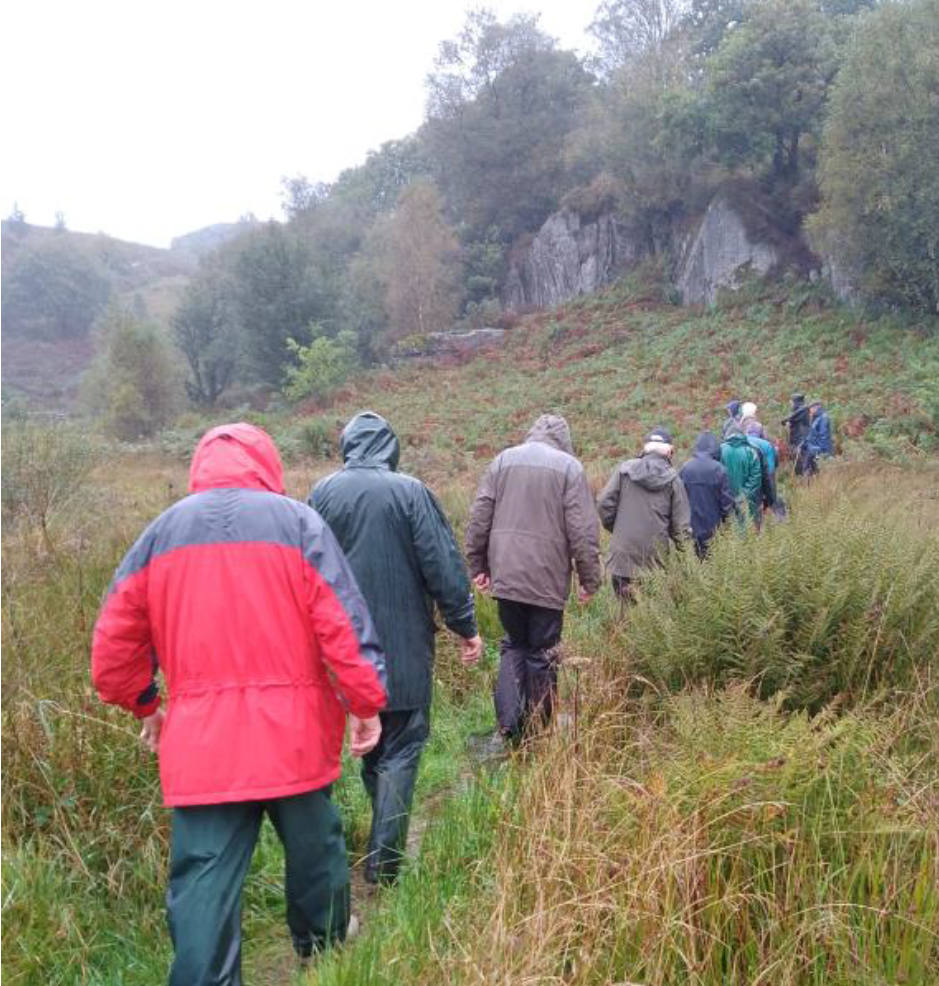
As many as practically possible met at the SCRT offices to arrange car share, others met up with us at The Newfield Inn at Seathwaite. From here we had a short walk to observe the small weir at Seathwaite and possible future management options.
It was then back to the vehicles for a drive to High Tongue for a walk of approximately three miles and a report from Steve (NT) who was able to focus on the good work being carried out by the NT tenant farmers and some good habitat management.
The walk had been good exercise and helped us to build up a good appetite, so although Hannah (SCRT) had planned lunch while in-situ, the weather dictated otherwise and hence Hannah’s plan “B” was a trip to the Newfield Inn for sandwiches, drinks and warm scones with jam and butter – scrumptious!
After lunch we headed to Troutal Farm, (Paddy Deady’s farm) for a discussion on the benefits of leaky dams (holding water back/slowing the flow, improving wetland species, reduced soil loss and improving water quality for salmonid species).
Then it was back into our vehicles for a trip to the top of the Duddon catchment at the junction of Wrynose pass and Hardknott pass. Here, believe it or not the rain became even heavier! Not to be outdone by the rain Paddy gave an excellent overview of the Upper Duddon Landscape Recovery Project and the part that each Partner contributed to the process and in particular the role that SCRT/DRA is playing in this exciting project. This new Upper Duddon Landscape Recovery project is a DEFRA-funded scheme, designed to work with farmers and other land managers to manage the land in ways that will improve soil and water quality and reverse the decline in nature.
Time was getting on and soon a decision was made to head home while we could still drive – before we needed to rely on canoes! A day of extremely heavy rain, but well worth the visit to a wonderful location – thanks to all who contributed to the day.
For more information regarding the Upper Duddon Landscape Recovery Project please click here.
Leaky dams in action!
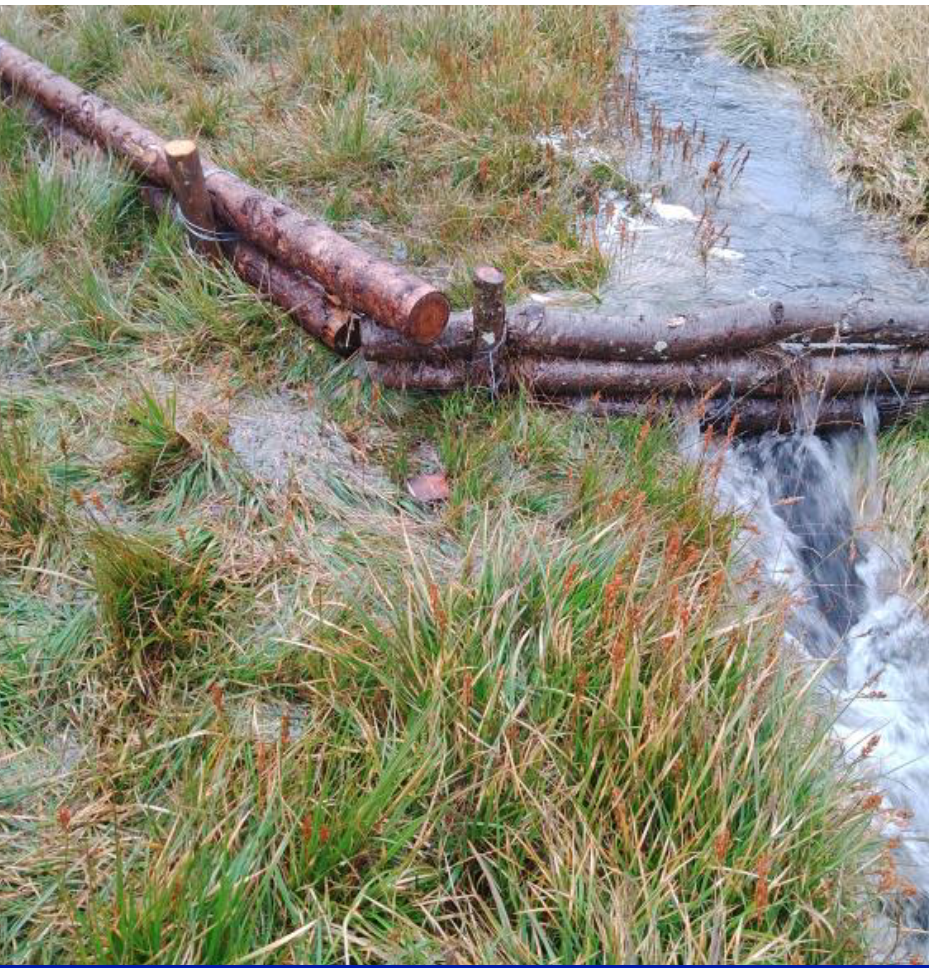
Leaky dams are designed to slow water flows, store water and trap sediment. This improves water quality and reduces the risk of flooding downstream.
The weather at the SCRT Patrons’ Event provided a great opportunity to witness these in action!
A big welcome to our new members!
How wonderful to have so many new members join us over the past year. Whether you have attended a volunteer session or event, joined our Facebook Group or followed us on Instagram, we are delighted that you are interested in what we, and our partner agencies, are doing in our catchment.
We warmly invite you to come along to an event or join our AGM (details on page 12). We are a very friendly bunch, passionate about the river and the local environment and love meeting people who share our interests!
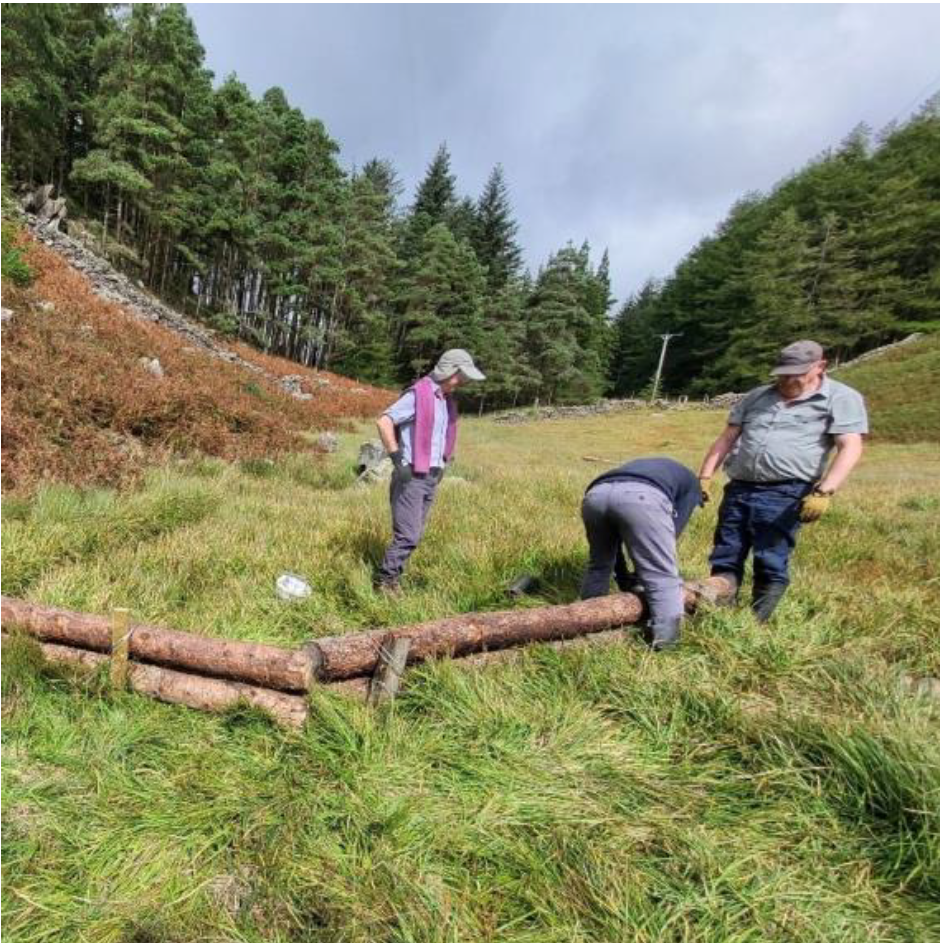
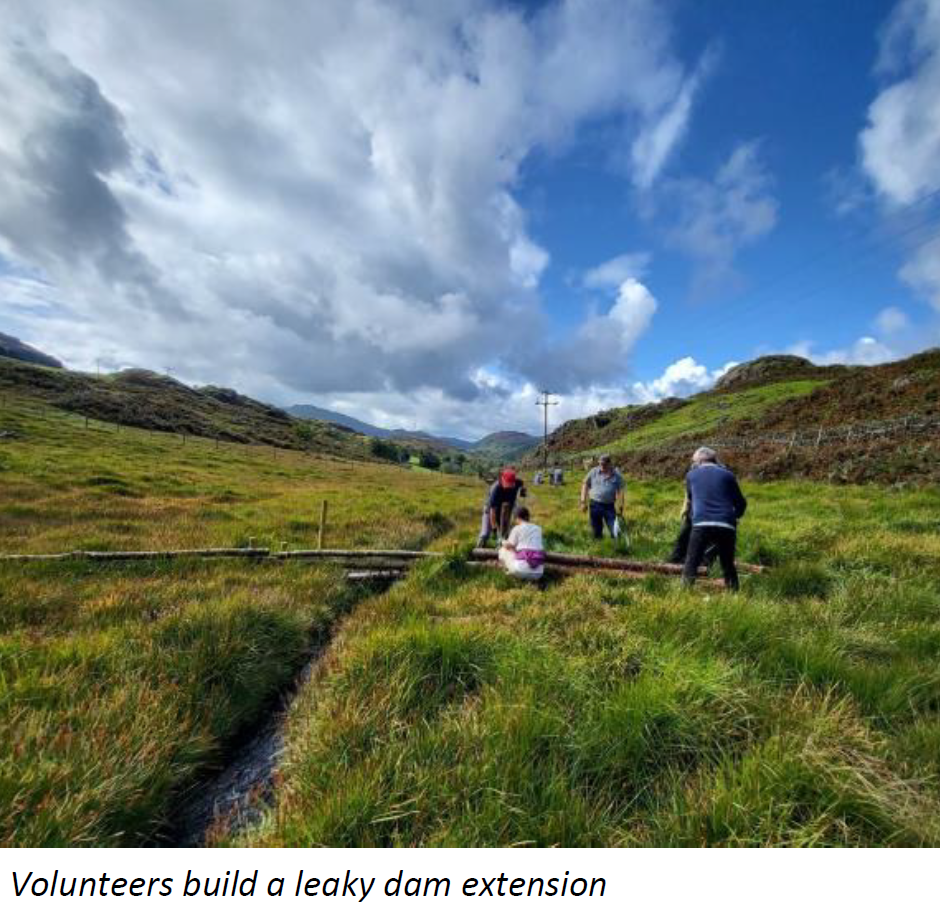
Volunteers enhance our leaky dams
By Hannah Teagle, SCRT
Towards the end of August, nine fantastic volunteers helped South Cumbria Rivers Trust to expand a series of leaky dams built on the Syke. This was a continuation of work from 2022, when five leaky dams were built to slow flows along the watercourse, dispersing sediment and increasing water storage in the upstream section.
Due to the flashy nature of the beck, it was decided that even more water storage could be encouraged, so each dam was expanded with additional wing walls. Two new leaky dams were also installed in between some of the existing dams to again enhance their effect.
Please join us for our AGM
Our 2024 AGM is a great opportunity to hear about the work of the Duddon River Association, find out about volunteer opportunities, share ideas and observations, ask questions and meet representatives from the agencies involved. It’s also a great way to get to know our members!
Date: Tuesday 20th February
Time: 7.00pm
Place: Old King’s Head, Broughton in Furness
Please email duddonriverassociation@gmail.com to confirm your attendance at the AGM (or send apologies).
For those wishing to enjoy a bite to eat before the meeting, please feel free to join us at 6.00pm. It would be helpful if you could let us know that you intend to dine first so that we can arrange this with the Old King’s Head.
We will be starting the meeting at 7.00pm promptly, so it’s worth arriving just before that to grab yourself a drink at the bar should you wish to do so. We anticipate the meeting will last a couple of hours, but will include a short comfort break in the middle. We aim to conclude the meeting by 9.00pm, though all are welcome to stay on afterwards for a drink and chat.
If you have any items which you would like to see added to the agenda, please email us at the same address as above. We will do our best to accommodate all requests.
We look forward to another productive meeting and a chance to meet everyone.
Rick (Chair), Steve (Secretary) & Pam (Social Media)
Diary Dates
November
Friday November 10 | 7:30pm | ‘Life and Wildlife in Lockdown’ (CWT Duddon Support Group) Thwaites village hall
Febuary
Tuesday Febuary 20 | 7:00pm | DRA AGM Old King’s Head Broughton in Furness
Please check our DRA Facebook Group for updates on events and volunteering activities.
SCRT Events
Tree planting, leaky dam building, electrofishing and riverfly survey training days are all run by SCRT. Please see their website for dates and more details:
www.scrt.co.uk/events
Restoring Hardknott Forest Events
To sign up to the Restoring Hardknott Forest quarterly newsletter please click here.
Information on Hardknott Forest events and booking can be found by clicking the link here.
Duddon River Association Contact Details
Chair: Rick Browne
Secretary: Steve Benn
Social Media/Newsletter: Pam Pennefather
Email: duddonriverassociation@gmail.com
Instagram: duddonriverassociation
Facebook Group: www.facebook.com/groups/724478118674632