The continued generation of electricity via nuclear fission may well play a key role in helping the world reduce carbon emissions. Furthermore, the nuclear industry has an important role in the UK. So the processes associated with it, and particularly the waste produced, are undoubtedly of interest from a sustainability perspective. It is the sustainable management of Britain’s existing nuclear waste (from fission and other sources) that is a key issue locally. Sellafield contains one of the largest stockpiles of nuclear waste in the world, and all of this remains on the surface. It is a key local interest to ensure that the Government invests in improved facilities for the storage of nuclear waste, both interim and long term.
Sustainable Duddon applied to join the South Copeland GDF (Geological Disposal Facility) Community Partnership and was accepted in January 2023. The Partnership was formed in accordance with the Government’s UK Policy Framework for Managing Radioactive Substances and Nuclear Decommissioning. This policy sets out a process for broad and inclusive community led engagement through a Community Partnership. As such, it could be seen as a generous offer to communities such as our own that are in the forefront of dealing with the UK’s nuclear waste. However we found that, increasingly, NWS exploited their control of funding and communications to prevent the open and inclusive engagement envisaged in the policy and which our community deserves. The information NWS disseminated in the name of the Community Partnership was merely their own corporate PR. Though they had no right to do so under policy, NWS unilaterally suspended Partnership meetings for several months, oversaw the creation of a report critical of many Partnership members. During this time they continued to send out communications in the Partnership’s name. It therefore became clear the Partnership was in large degree a fiction. To continue to engage formally with the Partnership would risk lending credence to this fiction. Accordingly, together with others, Sustainable Duddon withdrew from the Partnership in 2025.
What to do with Britain’s nuclear waste remains perhaps the most important sustainability issue locally. In the absence of a properly functioning Community Partnership, the points set out below are offered as a contribution to building a more sustainable relationship with nuclear waste in our area.
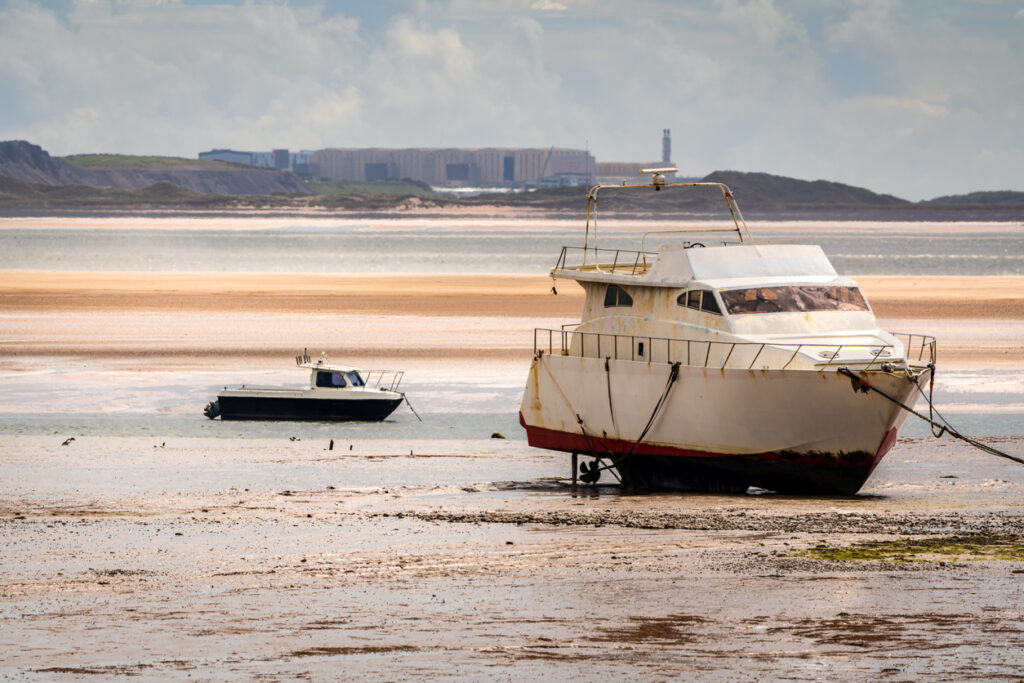
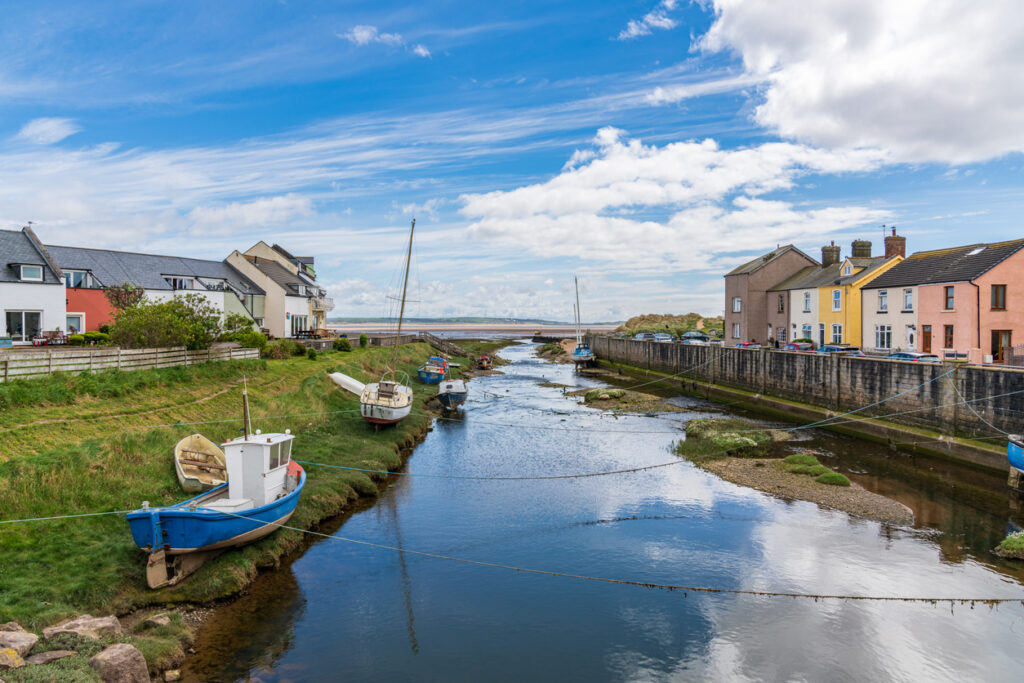
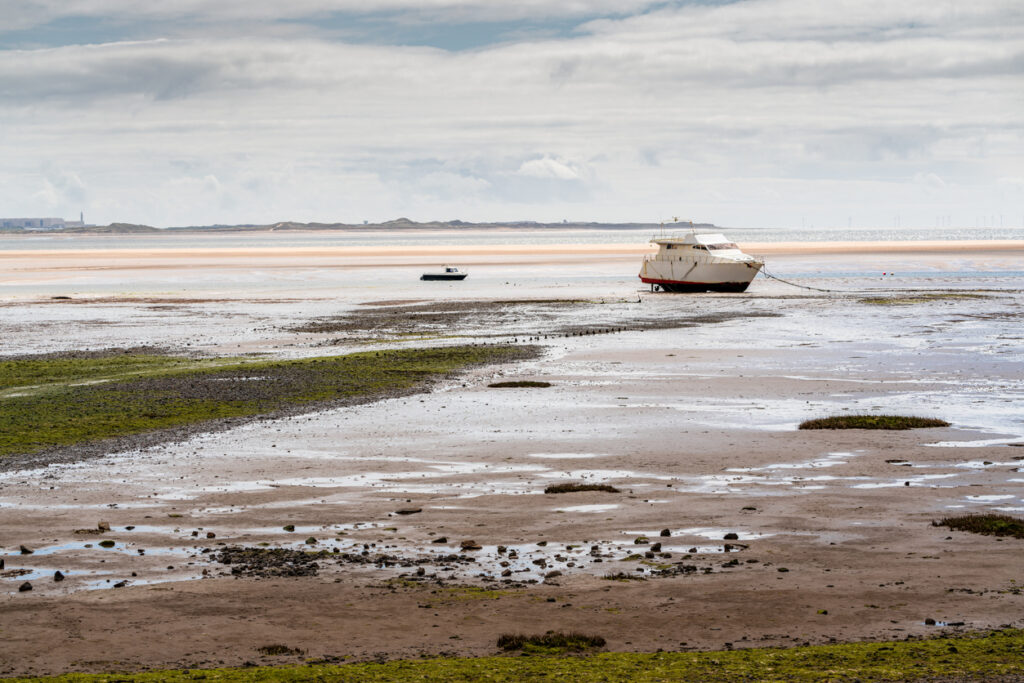
- The consideration of Haverigg as the site for the headworks of a GDF is of particular interest to Sustainable Duddon given that it is adjacent to the Duddon.
- In spite of NWS declaring a 3.5km square ‘area of interest’, i.e. all the land between Haverigg and Kirksanton, wrapped around the existing prison, the PR material published by NWS presents a picture of a few buildings and lots of green space. This is not credible, e.g. there would be an need to retain spoil that would need to be used for backfill decades later. Nor is it reasonable to assume that the site would be used just for a GDF.
- A constant complaint is that the Sellafield site is crowded following decades of gaining additional functions, so there is good reason to assume that a Haverigg site would, over time, simply develop into an overflow of various nuclear industry activities, becoming a ‘Sellafield B’.
- The volume of nuclear waste to be buried (in jargon, this is termed the Inventory) and thus the size of any GDF is not at all clear. As further nuclear powers stations are built, it will necessarily increase.
- The GDF design envisaged, i.e. a coastal headworks leading to long subsea tunnels, is a response to the constrained position of planning a GDF in West Cumbria. This in turn has inevitably added to projected costs. The Government’s National Infrastructure and Service Transformation Authority (NISTA) highlighted estimated GDF costs of between £20 and £53 billion and rated NWS’s current proposals as “unachievable”.
- To better understand the scale of the costs pressure, it is worth noting that the Nuclear Decommissioning Authority has flagged the costs of the GDF as a small portion of the total cost of dealing with Britains nuclear waste stockpile. The Nuclear Decommissioning Authority has estimated Sellafield alone will cost £151billion to decommission.
- To add to the complexity and cost, some anticipated nuclear waste, currently excluded from the Inventory, would require the invention of new treatment processes and infrastructure before it could be made suitable for placement in a GDF. Specifically, some Advanced Modular Reactors (AMRs) that are currently being funded by the Government, notably Molten Salt Reactors (MSRs) and High Temperature Gas Cooled Reactors (HTGRs).
- Whatever facilities are eventually put in place for the long term storage of nuclear waste, and wherever they may be, the ‘back end’ of that process, Sellafield, will continue to be a centre of nuclear waste management for at least a hundred years. Accordingly, nuclear waste handling will continue to be the dominant industry for our area.
- Perhaps the greatest risk for us, from a sustainability perspective, is that adequate facilities will not be put in place for the long term storage of Britain’s nuclear waste.
If you would like to know more about the ethical considerations that led to Sustainable Duddon withdrawing from the Community Partnership, please email Sustainableduddon@gmail.com.
Sustainable Duddon now works to raise nuclear waste related issues through the NWS NGO Exchange mechanism.