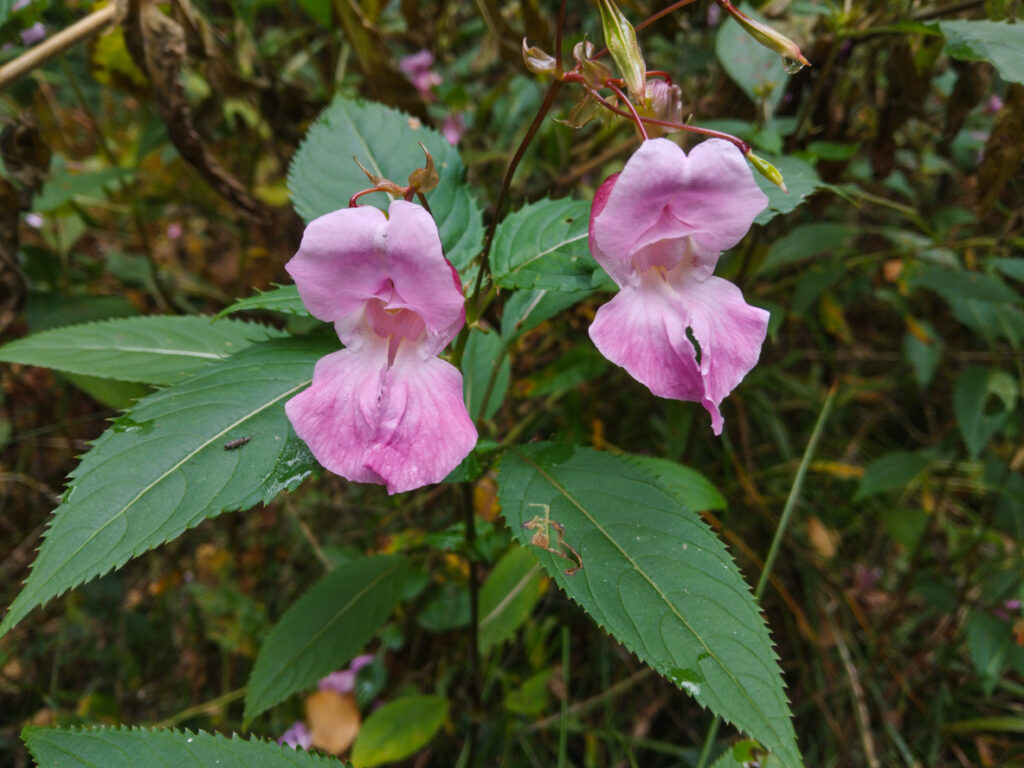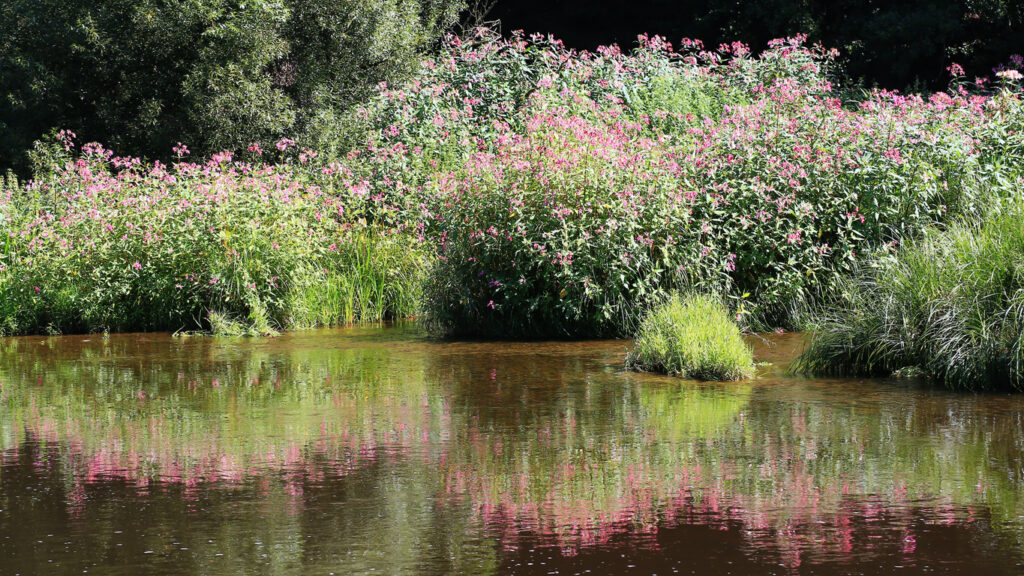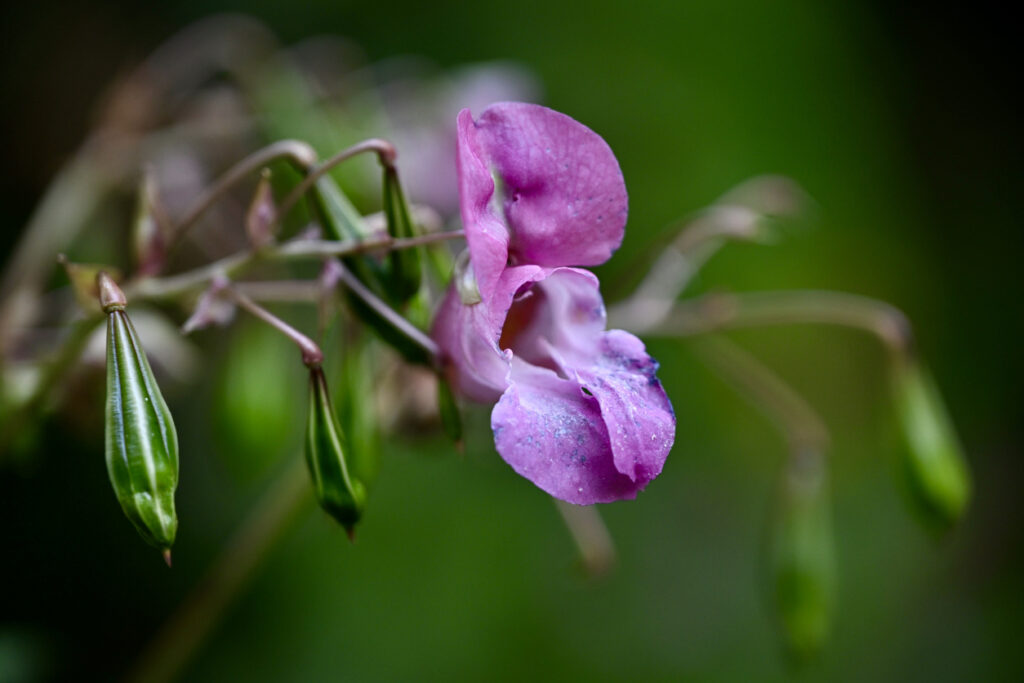
You may never have heard of Himalayan Balsam, however, you have probably seen it, even if you aren’t aware. As you travel the country’s roads through the spring and summer you may have noticed the swathes of pretty pink flowers that blanket the verges. It appears especially fond of motorway embankments. That is probably Himalayan Balsam, it can stretch for miles but it is an invasive non-native species.
Sustainable Duddon works closely with our partners the Duddon River Association and South Cumbria Rivers Trust to help control its spread. The removal of Himalayan Balsam is a priority, perhaps even an obsession. It’s increasing spread across the county has the potential to have a dramatic negative affect on the River Duddon catchment.
This isn’t a new project. It builds on several years of managing non-native invasive species, with a primary focus on Himalayan Balsam in the Duddon catchment. In 2022, 12 volunteers removed 28,493 plants across 3 sites. In 2025, 45 volunteers removed 238,503 plants across 17 sites. The volunteers spent 329 hours actively working on sites in 2025.
The plant may be seen as a super spreader. Each plant can produce up to 300 seeds which may then be distributed by the river, wind, animals, birds and humans. This means a small number of plants left for a relatively short period of time can result in a rapid colonisation of an area to the detriment of the local wildlife.
- Displaces native species:
Himalayan balsam is a fast-growing, aggressive plant that forms dense stands, crowding out and preventing native plant species from growing.
- Negative impact on pollinators:
Its sugary nectar attracts pollinators away from native plants, reducing the pollination success and seed production of native species.
- Causes soil erosion:
The plant is an annual that dies back completely in the winter, leaving riverbanks bare and vulnerable to erosion. The lack of root systems to hold the soil together can lead to landslides, increased flooding, and silt building up in rivers.
- Harms river habitats:
The increased erosion and silt can degrade water quality and suffocate fish eggs and other aquatic life.
- Reduces biodiversity:
By outcompeting native plants, it creates a monoculture that disrupts habitats and harms the insects and animals that depend on those native plants for food and shelter.
Each spring we need volunteers as we build work parties and plan activities. We need to locate the plants, which may be only a handful or may be a field full. Then we plan our action. Volunteers are out most days removing balsam. This is generally done by hand, pulling the plant from the soil or with weed slashers and brush cutters and building piles of plants. As mentioned earlier we have around 45 volunteers at the moment but more are needed to ensure we continue to protect as wide an area as possible. With so many sites of scientific interest locally the importance of this mundane and physical task cannot be understated. Your help would be appreciated and welcomed; why not volunteer and help with this project, drop us a line via the ‘Volunteer’ button.
The work is as hard as you want it to be, but we are all volunteers and therefore, it is never too serious. Last year we held a couple of Balsam Basher’s Bashes; a summer barbeque and an autumnal evening of supper and a chat. They are an opportunity to bring our community and volunteers together to have a ‘blather’ and also hear what plans and successes we have had. And all with no physical work involved!