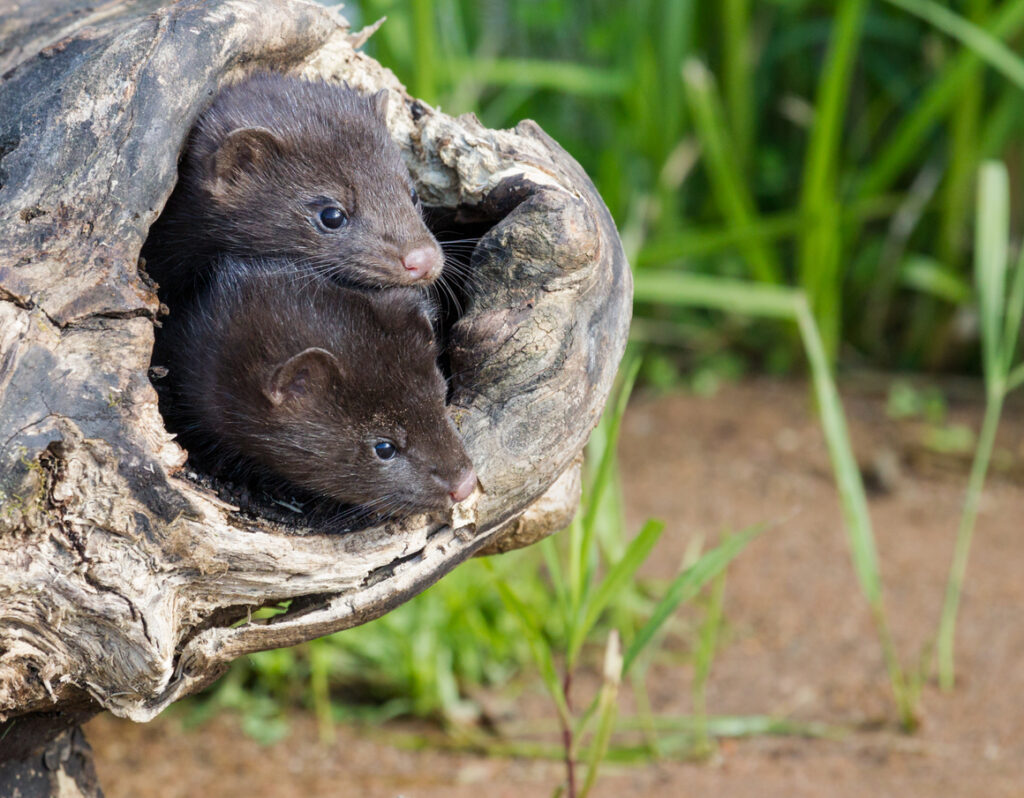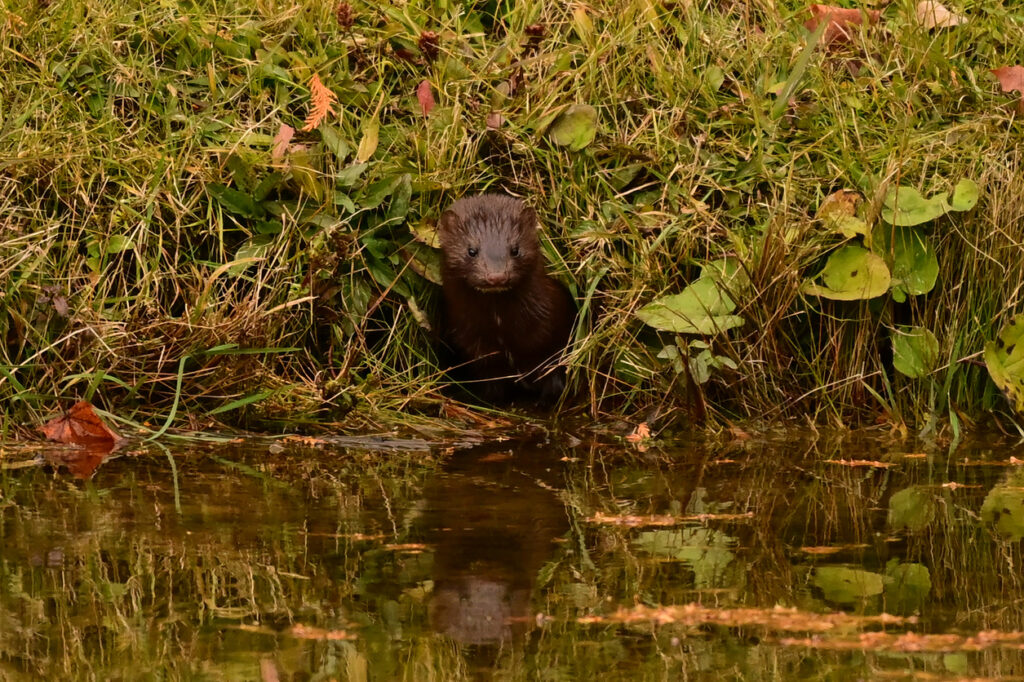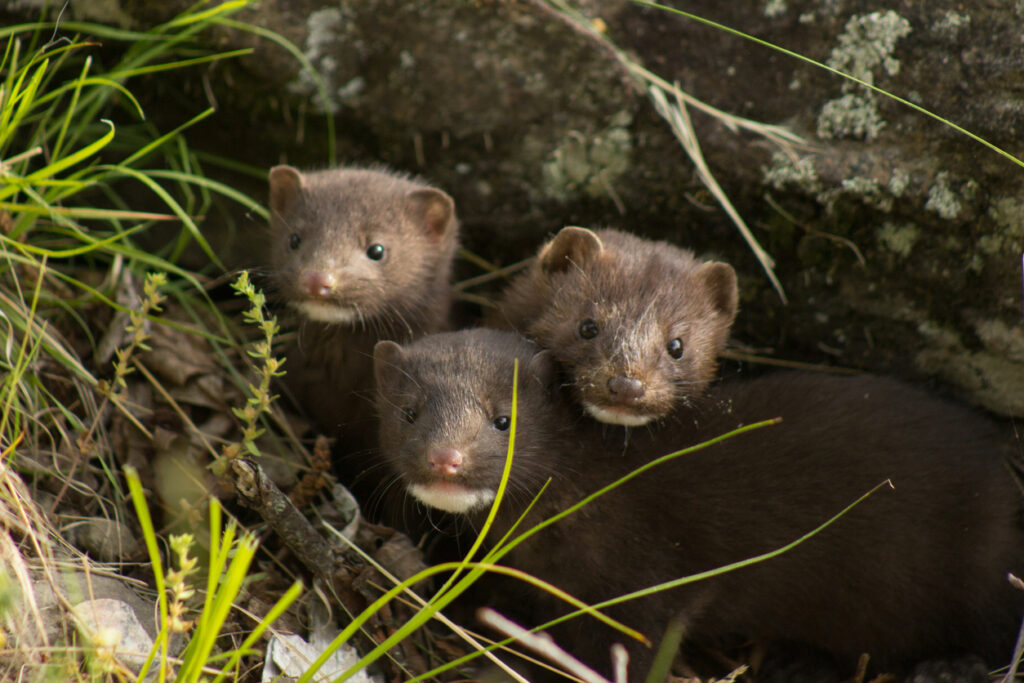
American mink (Neovison vison) may seem sleek and harmless. However, they are a serious invasive predator, with profound negative impacts on the biodiversity of the Duddon and its surrounding water bodies. Introduced in the UK through fur farming, many mink escaped or were released from captivity. They have since established extensive wild populations. As non-native animals without natural predators here, mink impose severe predation pressure on native species.
One of the most significant victims of mink predation is the water vole (Arvicola amphibius). Over decades, water voles have declined dramatically across Britain, losing more than 90% of their former range (Wildlife Conservation Society – WCL, 2023). Habitat loss has contributed to population decline in many areas. But predation by mink has been repeatedly identified as one of the principal causes of the collapse of local populations. Where mink are effectively controlled, water vole populations often recover. This demonstrates how central mink removal is to protecting this endangered species.
Mink are acutely adaptable, they swim, climb, and hunt across riparian habitats. They are a prodigious and opportunistic predator. Not only do they prey on water voles but also on ground‑nesting birds, ducklings, amphibians and fish. They are equally happy to kill domesticated poultry; your hens or ducks. Their efficiency as predators can undermine years of conservation work aimed at restoring natural river ecosystems. Mink are non-native and have no native predator to limit their numbers. Hence, they spread rapidly along connected watercourses, colonising catchments and outcompeting or eliminating vulnerable native populations.
Monitoring Mink
Mink are largely nocturnal and elusive, direct observation is rarely feasible. Instead we deploy specialised “mink rafts”. These are floating platforms anchored in water ways along banks to monitor the presence of mink. Each raft has a small tunnel, and on top of this a removable tray is filled with damp clay or a clay‑sand mix. When mink investigate the tunnel, they leave footprints in the clay pad.
Volunteers inspect these clay pads regularly, often weekly, to check for tracks. When mink footprints are confirmed, the raft can be converted from a monitoring station into a trapping station. This is done by replacing the clay tray with a humane live-capture trap. This method has multiple advantages. Not only does it ensure that traps are set only where mink have definitely been detected, minimizing impact on non-target species. It allows early detection of new or exploratory mink before they establish a territory. This is logistically efficient and volunteer‑friendly, helping to reduce the hours people need to be working in the field.
Mink Control Across the UK
The Waterlife Recovery Trust (WRT) is at the forefront of large‑scale mink removal in the UK. Formed from years of research and local conservation work, the Trust aims to remove mink from whole regions and prevent recolonisation by establishing sustained, coordinated trapping networks (Waterlife Recovery Trust, 2024).
In WRT has deployed thousands of rafts and “smart traps”. These are live-capture cage traps equipped with remote monitors that send alerts SMS or email alerts when triggered (Waterlife Recovery Trust, 2024). This approach dramatically increases efficiency, reducing the need for constant physical checks of every trap. Thanks to this network, mink populations in the core area, across East Anglia, have plummeted, with annual reductions of over 70% reported (WCL, 2023). Unfortunately, around the Duddon we do not have a consistent phone or internet connectivity to use these devices on every trap. Therefore, we use the more traditional, labour intensive approach outlined earlier to ensure traps are operated as humanely as possible.
As mink numbers decline, evidence of native species recovery is growing. Water voles and wetland-breeding birds are already returning to some formerly depopulated areas (The Guardian, 2024). Buoyed by these successes, the WRT aims to scale up. Its vision is to create a “mink‑free belt” stretching from the Thames to Lincolnshire, building toward a future in which much of England is permanently mink‑free (Waterlife Recovery Trust, 2024).
The WRT efforts have inspired a similar initiative across Cumbria. The Rivers Trusts, Wildlife Trusts, The Lake District National Park, and National Trust are collaborating on mink control at a landscape scale. Our work is part of this much wider effort.
Why Mink Removal Matters
Removing mink is not about vilifying all predators. Native predators such as Otters, Pine Martens and Herons remain vital for healthy balanced ecosystem. The problem is that mink are non-native, and our ecosystems did not evolve with them. They exploit niches and prey species in ways that local species cannot cope with, undermining the biodiversity of the Duddon.
By detecting mink using rafts and clay pads. Then employing humane trapping through a coordinated effort, we can dramatically reduce predation pressure on vulnerable native wildlife. The recovery of water voles, ground-nesting birds and amphibians in mink‑controlled areas proves that removal works.
Ultimately, a mink‑free river system supports richer, more balanced ecosystems. Benefiting not just the species we aim to protect, but the wider environment and communities that depend on healthy, vibrant waterways.